Understanding the difference between are and were is important for speaking and writing correct English. Both words come from the verb to be, but they describe different time periods. Are is used in the present tense to talk about people, things, or situations that exist or happen now. For example, you might say, “They are happy” or “You are my best friend.”
In contrast, were is the past-tense form used with plural subjects and the pronoun you. For example, “They were happy yesterday” or “You were late for class.” Although these words may seem easy to understand, choosing the wrong one can make a sentence grammatically incorrect.
In this guide, you’ll learn the difference between are and were, explore their meanings, and discover simple grammar rules with practical examples. Whether you’re learning English or improving your writing skills, these explanations will help you use both words confidently in 2026.
What Does “Are” Mean?
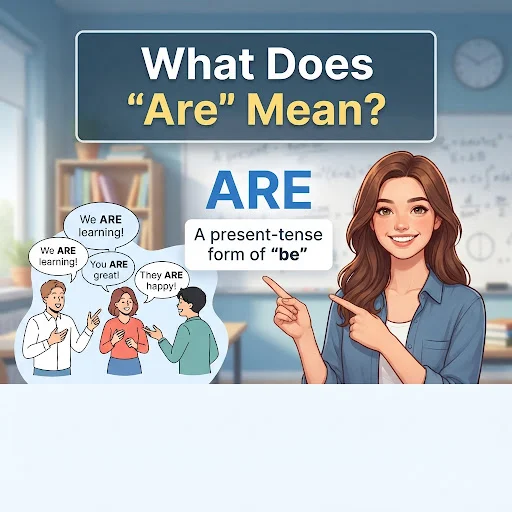
Are is a present-tense form of the verb “to be.” We use it mainly with you, we, they, and plural nouns.
It can describe a person’s condition, location, identity, situation, or an action that is happening now when combined with a present participle.
For example:
- You are very kind.
- We are ready.
- They are at home.
- The students are tired.
- My friends are busy.
In each example, are connects the subject with information about the present situation.
When Do You Use “Are”?
You usually use are when the subject is you, we, they, or a plural noun.
The basic pattern is:
Subject + are + information
Examples:
- You are late.
- We are hungry.
- They are excited.
- The children are outside.
- My parents are busy.
You can also use are in questions.
Examples:
- Are you ready?
- Are they coming?
- Are we late?
- Are the kids asleep?
- Are your friends here?
In these questions, are comes before the subject.
What Does “Were” Mean?
Were is a past-tense form of the verb “to be.” It is normally used with you, we, they, and plural nouns when talking about the past.
Examples:
- You were tired yesterday.
- We were at school.
- They were happy.
- The children were outside.
- My parents were busy.
Unlike are, which generally refers to the present, were usually points to a past situation.
When Do You Use “Were”?
Use were when you are talking about something that happened or existed in the past.
Examples:
- We were tired after the trip.
- They were at the restaurant last night.
- You were right about the problem.
- The students were nervous before the exam.
- My friends were at my house yesterday.
You can also use were to form questions about the past.
Examples:
- Were you at work yesterday?
- Were they happy?
- Were we too late?
- Were the stores open?
- Were your parents there?
Are vs Were: The Basic Difference
The easiest way to understand are vs were is to think about time.
Are normally refers to the present.
Were normally refers to the past.
| Word | Main tense | Common subjects | Example |
| Are | Present | You, we, they, plural nouns | They are happy. |
| Were | Past | You, we, they, plural nouns | They were happy. |
Compare these sentences:
Present:
They are at home.
Past:
They were at home.
The first sentence tells us about their current location. The second tells us about their location at some time in the past.
Another example:
She and her friends are tired.
This means they are tired now.
She and her friends were tired.
This means they were tired at an earlier time.
Are vs Were in American English
In American English, are and were follow the same basic grammatical principles used in standard English.
The important distinction is usually present versus past, but were also has a special use in hypothetical statements.
For example:
If I were rich, I would travel around the world.
This does not mean the speaker was rich in the past. The speaker is imagining a situation that is not currently true.
This form is often called the subjunctive mood.
Understanding this special use is important because simply memorizing “were = past” is not enough.
Are vs Were With “You”
One common source of confusion is the word you.
In standard American English, you uses are in the present and were in the past.
Examples:
- You are my best friend.
- You were my best friend.
- You are very helpful.
- You were very helpful.
- You are at home.
- You were at home.
Notice the difference in time.
Present
You are busy today.
Past
You were busy yesterday.
Even though you can refer to one person or multiple people, the verb forms remain are and were.
Are vs Were With “We”
The same pattern applies to we.
Use are for the present:
We are ready.
Use were for the past:
We were ready yesterday.
More examples:
- We are friends.
- We were friends in college.
- We are excited about the trip.
- We were excited about the trip last month.
- We are at the office.
- We were at the office earlier.
The time expression can help you determine which word you need.
Words such as now, today, currently, and at the moment often point toward are.
Words such as yesterday, last week, earlier, and previously often point toward were.
Are vs Were With “They”
Use are when talking about what they are or how they are now.
Examples:
- They are students.
- They are happy.
- They are outside.
- They are working.
- They are ready.
Use were when describing their earlier situation.
Examples:
- They were students.
- They were happy.
- They were outside.
- They were working.
- They were ready.
Compare:
They are in New York.
This normally means they are in New York now.
They were in New York.
This means they were there at some point in the past.
Are vs Were With Plural Nouns
Plural nouns normally take are in the present and were in the past.
Examples:
- The dogs are hungry.
- The dogs were hungry.
- The houses are expensive.
- The houses were expensive.
- The students are ready.
- The students were ready.
- My shoes are dirty.
- My shoes were dirty.
A useful pattern is:
Plural subject + are = present
Plural subject + were = past
Are vs Were in Questions
Both words can begin questions.
Use are for present situations:
- Are you okay?
- Are they home?
- Are we ready?
- Are the children asleep?
Use were for past situations:
- Were you okay?
- Were they home?
- Were we ready?
- Were the children asleep?
Compare:
Are you at work?
This asks about your current location.
Were you at work?
This asks about your location at an earlier time.
The difference is small in spelling but important in meaning.
Are vs Were With Adjectives
Both words can connect a subject to an adjective.
With are, the adjective describes the present:
- We are happy.
- They are nervous.
- You are kind.
- The children are tired.
With were, the adjective describes a past condition:
- We were happy.
- They were nervous.
- You were kind.
- The children were tired.
Changing are to were can completely change the time reference.
For example:
The students are nervous.
They feel nervous now.
The students were nervous.
They felt nervous earlier.
Are vs Were With Locations
You can also use these words to talk about locations.
Examples with are:
- We are at home.
- They are in Chicago.
- You are at the office.
- The books are on the table.
Examples with were:
- We were at home.
- They were in Chicago.
- You were at the office.
- The books were on the table.
The choice depends on whether the location applies to the present or past.
Are vs Were With Continuous Actions
Are can be used with a verb ending in -ing to create the present continuous tense.
Examples:
- They are working.
- We are studying.
- You are learning.
- The children are playing.
Were can be used with a verb ending in -ing to create the past continuous tense.
Examples:
- They were working.
- We were studying.
- You were learning.
- The children were playing.
Compare:
They are watching TV.
They were watching TV at some point in the past.
This is one of the most useful differences between are vs were.
Are vs Were in Passive Voice
Both words can also appear in passive constructions.
Examples with are:
- The rooms are cleaned every day.
- The windows are washed regularly.
- The documents are checked carefully.
Examples with were:
- The rooms were cleaned yesterday.
- The windows were washed last week.
- The documents were checked earlier.
Again, the main difference is the time reference.
Are + past participle often describes a present state or regular process.
Were + past participle usually describes a completed past event or past state.
The Special Rule: “If I Were”
One of the most important things to understand about were is its use in hypothetical situations.
You may hear:
If I were you, I would apologize.
This is standard American English.
The speaker is not saying that they literally became the other person. Instead, they are imagining a situation.
Other examples include:
- If I were rich, I would buy a house.
- If I were taller, I would play basketball.
- If she were here, she could help us.
- If he were more careful, he might avoid the problem.
- If it were easier, everyone would do it.
This is an important distinction because were does not always mean past time.
Why Do We Say “If I Were”?
Normally, I takes was in the past:
I was tired.
So why do we say:
If I were you…
The answer is grammar.
In hypothetical or contrary-to-fact statements, were is traditionally used as the subjunctive form of “to be.”
Examples:
If he were here, he would know what to do.
If she were older, she could travel alone.
This form remains common and standard in American English, especially in careful writing and formal speech.
Are vs Were vs Was
Understanding are vs were becomes easier when you compare them with was.
| Subject | Present | Past |
| I | am | was |
| You | are | were |
| He | is | was |
| She | is | was |
| It | is | was |
| We | are | were |
| They | are | were |
For example:
- I am happy.
- You are happy.
- He is happy.
- We are happy.
- They are happy.
In the past:
- I was happy.
- You were happy.
- He was happy.
- We were happy.
- They were happy.
This table is useful because it shows that were is not the past form for every subject.
Common Mistakes With Are and Were
Learning grammar is not only about knowing the correct form. You also need to recognize common errors.
Mistake 1: Using “Were” for the Present
Incorrect:
They were happy today.
This can be correct only if “today” refers to an earlier period of the same day. Without that context, are is normally more appropriate for a current situation.
Better:
They are happy today.
Mistake 2: Using “Are” for the Past
Incorrect:
We are at the restaurant last night.
The phrase last night clearly places the event in the past.
Correct:
We were at the restaurant last night.
Mistake 3: Saying “You Was”
In standard American English, you takes were, not was, in the simple past.
Incorrect:
You was late.
Correct:
You were late.
Mistake 4: Forgetting “Were” in Hypothetical Statements
Less standard:
If I was you, I would wait.
Standard formal American English:
If I were you, I would wait.
The second version uses the traditional subjunctive construction.
Mistake 5: Confusing Present and Past Continuous
Incorrect:
They were working right now.
If the action is happening at the moment of speaking, use are.
Correct:
They are working right now.
For the past:
They were working when I called.
How to Remember Are vs Were
A simple memory trick can help.
Think:
ARE = NOW
WERE = BEFORE
For example:
They are here now.
They were here before.
Another trick is to connect the words with common time expressions.
Are
Think about:
- now
- today
- currently
- at the moment
- these days
Were
Think about:
- yesterday
- last night
- last year
- earlier
- before
- at that time
This isn’t an absolute rule because context can change the meaning, but it works well for beginners.
Are vs Were Examples in Everyday English
Here are some natural examples from everyday American English.
1 Talking About People
- We are tired.
- We were tired after work.
- They are busy.
- They were busy yesterday.
- You are funny.
- You were funny at the party.
2 Talking About Places
- We are at home.
- We were at home last night.
- They are in California.
- They were in California last summer.
3 Talking About Feelings
- You are happy.
- You were happy yesterday.
- They are nervous.
- They were nervous before the interview.
4 Talking About Actions
- We are studying.
- We were studying earlier.
- They are playing outside.
- They were playing outside when it started raining.
Are vs Were in Formal Writing
In formal writing, choosing the correct form matters because tense helps readers understand when something happened.
For example:
The researchers are examining the results.
This indicates that the research is currently being examined.
The researchers were examining the results.
This describes an activity that was happening in the past.
A small change from are to were can therefore change the timeline of an entire sentence.
Are vs Were in Conversations
In everyday American conversations, both words appear frequently.
Consider this short exchange:
Alex: Where are the kids?
Sam: They are outside.
Later, Alex might say:
Alex: Where were the kids earlier?
Sam: They were at the park.
The first conversation is about the present. The second refers to the past.
This simple distinction appears constantly in everyday speech.
Are vs Were in Negative Sentences
You can also use both words in negative sentences.
With are:
- We are not ready.
- They are not home.
- You are not wrong.
- The students are not finished.
Common contractions include:
- are not → aren’t
Examples:
- We aren’t ready.
- They aren’t home.
- You aren’t wrong.
With were:
- We were not ready.
- They were not home.
- You were not wrong.
- The students were not finished.
The common contraction is:
- were not → weren’t
Examples:
- We weren’t ready.
- They weren’t home.
- You weren’t wrong.
Are vs Were in Short Answers
English speakers often use are and were in short answers.
Question:
Are they ready?
Answer:
Yes, they are.
Question:
Were they ready?
Answer:
Yes, they were.
Negative answers work the same way:
No, they aren’t.
No, they weren’t.
These short forms are especially common in conversation.
Are vs Were: Quick Comparison Chart
| Feature | Are | Were |
| Main use | Present | Past |
| Common subjects | You, we, they, plural nouns | You, we, they, plural nouns |
| Present continuous | Yes | No |
| Past continuous | No | Yes |
| Questions | Yes | Yes |
| Negative | Are not / aren’t | Were not / weren’t |
| Hypothetical use | Usually no | Yes |
| Example | They are ready. | They were ready. |
The most important point is simple: are generally connects a subject to the present, while were generally connects a subject to the past.
Are vs Were: Sentence Practice
Try choosing the correct word.
- They ___ at home right now.
- We ___ at school yesterday.
- You ___ very helpful today.
- They ___ tired after the game.
- ___ you at work last night?
- ___ they ready now?
- If I ___ you, I would wait.
- The children ___ playing outside right now.
- The children ___ playing outside earlier.
- We ___ happy to see you today.
Answers
- are
- were
- are
- were
- Were
- Are
- were
- are
- were
- are
Notice how words such as right now, today, yesterday, last night, and earlier help establish the time.
When Can “Were” Refer to Something That Is Not Past?
This is an important advanced point.
Were can refer to an imagined, hypothetical, or unreal situation rather than a real past event.
For example:
If I were taller, I could reach it.
The speaker isn’t necessarily talking about the past. They are imagining a different present situation.
Another example:
If she were here, she would help us.
The speaker may be talking about the present. The use of were signals that the situation is hypothetical or contrary to reality.
So, remember:
Were usually indicates the past, but it can also appear in hypothetical constructions.
Are vs Were in Conditional Sentences
Conditional sentences often cause confusion.
Consider:
If they are ready, we can leave.
This describes a possible present situation.
The speaker thinks they may actually be ready.
Now compare:
If they were ready, we could leave.
This can suggest a hypothetical or unlikely situation.
The difference can affect the meaning.
Another pair:
If she is here, ask her.
This treats her presence as a real possibility.
If she were here, she would help.
This presents her presence as hypothetical or contrary to fact.
Are vs Were in American English Speech
In casual American English, speakers often use contractions.
For are:
- you are → you’re
- we are → we’re
- they are → they’re
Examples:
- You’re ready.
- We’re late.
- They’re outside.
For were, there are fewer common contractions:
- you were → you were
- we were → we were
- they were → they were
In casual speech, pronunciation becomes faster, but the written forms generally remain unchanged.
Spelling Tips for Are and Were
Neither are nor were is difficult to spell, but learners sometimes confuse them because both are forms of “to be.”
Remember:
A-R-E = are
W-E-R-E = were
A useful visual trick is:
ARE → present
WERE → past or hypothetical
Don’t add extra letters.
Incorrect:
- weare
- werre
- where
Correct:
- are
- were
Also remember that where is a completely different word.
Are vs Were vs Where
These words can sound confusing in some accents, but they have completely different meanings.
Are is a form of “to be.”
They are happy.
Were is another form of “to be.”
They were happy.
Where asks about a location.
Where are they?
A simple way to remember:
- Are = verb
- Were = past verb
- Where = location question
Do not confuse were with where when writing.
Why Correct Tense Matters
Choosing between are and were isn’t just about following a grammar rule. It helps your reader or listener understand the timeline.
Compare:
The employees are in the meeting.
This tells us the meeting is happening now or they are currently there.
The employees were in the meeting.
This tells us their presence happened in the past.
If you use the wrong verb, the reader may misunderstand when the situation occurred.
That is why learning are vs were is useful for emails, school assignments, workplace communication, social media posts, and everyday conversations.
A Simple Rule for Beginners
If you are still confused, start with this basic rule:
Use “Are” for the Present
Use are when you are describing something happening or existing now.
Examples:
- They are happy.
- We are ready.
- You are early.
- The books are here.
Use “Were” for the Past
Use were when describing something that happened or existed before now.
Examples:
- They were happy yesterday.
- We were ready earlier.
- You were early.
- The books were here this morning.
Remember the Exception
Use were in many hypothetical statements:
If I were you, I would ask.
This special use becomes easier once you see it in several examples.
Frequently Asked Questions About Are vs Were
Is “are” present tense or past tense?
Are is a present-tense form of the verb “to be.” It is commonly used with you, we, they, and plural nouns.
Example:
They are ready.
This means they are ready now.
Is “were” present or past tense?
Were is normally a past-tense form of “to be.” It is used with you, we, they, and plural nouns.
Example:
They were ready yesterday.
However, were can also appear in hypothetical statements such as “If I were you.”
Should I say “you are” or “you were”?
Use you are for the present and you were for the past.
Examples:
You are my friend.
You were my friend.
The correct choice depends on the time and meaning you want to express.
Is “you was” grammatically correct?
In standard American English, you was is not the standard form. The standard past form is you were.
Correct:
You were late.
Why do we say “If I were you”?
If I were you is a standard hypothetical construction in American English. It uses the subjunctive form were to describe an imagined situation.
Example:
If I were you, I would talk to your teacher.
Can “were” talk about the present?
Yes. In hypothetical or unreal constructions, were can refer to a situation that is not necessarily in the past.
Example:
If she were here, she would help us.
The sentence can describe an imagined present situation.
What is the difference between “they are” and “they were”?
They are refers to the present.
They were at home last night.
What is the difference between “we are” and “we were”?
We are describes the present.
We are busy.
Is “were” always past tense?
No. Were is normally a past-tense form, but it also appears in hypothetical or subjunctive constructions.
For example:
If I were rich, I would travel more.
This is not necessarily a statement about the past.
Which is correct: “Are you there?” or “Were you there?”
Both can be correct, but they ask different questions.
Are you there? asks about the present.
Were you there? asks whether you were present at a past event or location.
Which is correct: “They are working” or “They were working”?
Both are grammatically correct.
They are working means the action is happening now.
They were working means the action was happening at a previous time.
Can I use “are” with singular nouns?
Usually, no. A singular noun generally takes is, not are.
Correct:
The student is ready.
For plural nouns:
The students are ready.
However, you is singular or plural but still takes are.
Final Thoughts
The key is not to memorize dozens of isolated sentences. Instead, look at the subject, time reference, and meaning of the sentence. If you’re talking about the present with you, we, they, or a plural noun, are will often be the right choice. If you’re talking about the past, were will usually be correct.
With regular practice, the distinction will start to feel natural. Read examples aloud, pay attention to time expressions, and practice changing present sentences into past sentences. For example, change “They are tired” to “They were tired.” Once you understand that simple pattern, more advanced uses become much easier.

Daniel Carter is a passionate writer who creates clear, helpful, and easy-to-understand content. He focuses on language, grammar, word meanings, and everyday expressions, helping readers find simple answers to common questions.