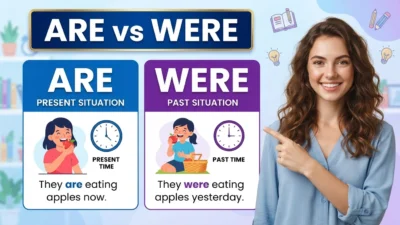
“Was there” and “were there” look almost identical, but they are not interchangeable in standard English. The correct choice depends mainly on whether the noun that follows is singular, plural, or uncountable.
For example, you would say, “Was there a problem?” because “a problem” is singular. However, you would say, “Were there any problems?” because “problems” is plural.
This small grammar difference can cause confusion, especially when you are forming questions or describing something that existed in the past. The word there can make the sentence feel unusual because it comes before the noun, so learners sometimes have difficulty deciding whether to use was or were.
What Does “Was There” Mean?

“Was there” is the past-tense form of an existential sentence used with a singular noun or an uncountable noun.
We use it when we want to ask whether one person, one thing, one event, or one uncountable substance existed, appeared, happened, or was present at a particular time or place in the past.
For example:
- Was there a problem?
- Was there a reason for the delay?
- Was there a meeting yesterday?
- Was there enough food for everyone?
- Was there any water in the bottle?
In each example, the noun or noun phrase is treated as singular or uncountable.
The basic structure is:
Was + there + singular/uncountable noun?
Examples of “Was There”
Consider these sentences:
Was there a mistake in the report?
Here, “mistake” is singular, so we use was.
Was there a student in the classroom?
“Student” is singular, so was is correct.
Was there enough time to finish the work?
“Time” is an uncountable noun in this context, so was is correct.
Was there any milk in the refrigerator?
“Milk” is uncountable, so we use was.
Was there a reason you left early?
“Reason” refers to one reason, so was is correct.
What Does “Were There” Mean?

“Were there” is the past-tense form used with plural nouns.
We use it when we are asking whether two or more people, things, events, or objects existed or were present in the past.
The basic structure is:
Were + there + plural noun?
For example:
- Were there any problems?
- Were there students in the classroom?
- Were there enough chairs?
- Were there several reasons for the decision?
- Were there many people at the event?
The important point is that the noun after there is plural.
Examples of “Were There”
Were there any mistakes in the report?
“Mistakes” is plural, so we use were.
Were there students waiting outside?
“Students” refers to more than one student, so were is correct.
Were there enough seats for everyone?
“Seats” is plural, so were is correct.
Were there many people at the concert?
“People” is plural, so we use were.
Were there any restaurants near the hotel?
“Restaurants” is plural, so were is correct.
Was There vs. Were There: The Main Difference
The easiest way to understand the difference is to look at the noun that follows there.
| Expression | Used With | Example |
| Was there | Singular noun | Was there a problem? |
| Was there | Uncountable noun | Was there enough water? |
| Were there | Plural noun | Were there any problems? |
| Were there | Plural people/things | Were there many students? |
The verb agrees with the noun that follows there, not simply with the word there.
This is one of the most important rules to remember.
Singular = Was There
Use was there when the noun is singular.
- Was there a book on the table?
- Was there a car outside?
- Was there an accident?
- Was there a problem?
- Was there a meeting?
- Was there a doctor available?
Plural = Were There
Use were there when the noun is plural.
- Were there books on the table?
- Were there cars outside?
- Were there any accidents?
- Were there problems?
- Were there meetings?
- Were there doctors available?
Uncountable = Was There
Use was there with uncountable nouns.
- Was there enough money?
- Was there any information?
- Was there enough food?
- Was there any water?
- Was there sufficient time?
- Was there any traffic?
Although these nouns can refer to a large amount, they are grammatically treated as singular.
Why Does “There” Make This Grammar Confusing?
The word there can make subject-verb agreement confusing because it often appears before the noun.
Compare these sentences:
There was a problem.
There were several problems.
The word there appears in both sentences, but the verb changes from was to were because the noun changes from singular to plural.
Think of the sentence as:
A problem was there.
Several problems were there.
The natural word order is different, but the agreement becomes easier to understand.
In existential sentences, there introduces the existence or presence of something. The noun that follows determines whether we use was or were.
“Was There” in Questions
One of the most common uses of was there is in past-tense questions.
Use it to ask whether something existed, happened, or was present.
Examples
Was there a party last night?
Was there a reason for the change?
Notice that words such as a, an, and anyone often signal a singular idea.
Questions About Places
You can use was there to ask about something that existed in a particular place.
- Was there a bank near your office?
- Was there a restaurant beside the hotel?
- Was there a parking lot nearby?
- Was there a hospital in the area?
- Was there a school in that neighborhood?
Each sentence refers to one place or one thing.
Questions About Events
You can also use was there to ask about an event.
- Was there a meeting yesterday?
- Was there an accident on the highway?
- Was there a concert last weekend?
- Was there a delay at the airport?
- Was there a celebration after the game?
The noun following there is singular.
“Were There” in Questions
Use were there when the noun is plural.
These questions ask whether multiple people, objects, or events existed or were present.
Examples
- Were there any problems?
- Were there many people at the party?
- Were there enough chairs?
- Were there several options?
- Were there students in the classroom?
- Were there restaurants near the hotel?
The plural noun controls the verb.
Questions About People
Use were there when asking about multiple people.
- Were there many guests?
- Were there any teachers?
- Were there students in the library?
- Were there several doctors available?
- Were there children at the event?
However, when the question refers to one person, use was there:
- Was there a teacher in the room?
- Was there a doctor available?
- Was there a child outside?
Was There or Were There in Negative Sentences?
Both forms can also appear in negative statements.
For singular or uncountable nouns, use:
There was not…
or the contraction:
There wasn’t…
Examples:
- There wasn’t a problem.
- There wasn’t enough food.
- There wasn’t anyone at home.
- There wasn’t a reason to worry.
- There wasn’t enough time.
For plural nouns, use:
There were not…
or:
There weren’t…
Examples:
- There weren’t any problems.
- There weren’t enough chairs.
- There weren’t many people there.
- There weren’t any students in the classroom.
- There weren’t enough buses.
The same singular/plural rule applies in both positive and negative sentences.
Was There or Were There in Questions With “Any”?
The word any does not automatically determine whether you should use was or were.
Look at the noun after any.
Singular or Uncountable
Use was:
- Was there any water?
- Was there any information?
- Was there any money?
- Was there any evidence?
- Was there any food?
These nouns are uncountable.
You can also use was with a singular countable noun:
- Was there any problem?
- Was there any student who complained?
However, natural English often uses a slightly different construction depending on the intended meaning.
Plural
Use were:
- Were there any problems?
- Were there any students?
- Were there any questions?
- Were there any mistakes?
- Were there any tickets left?
The noun is plural, so were is required in standard English.
Was There or Were There With “A” and “An”
A very useful shortcut is to look for a or an.
If the sentence contains a singular countable noun with a or an, use was there.
Examples:
- Was there a problem?
- Was there a mistake?
- Was there a meeting?
- Was there an accident?
- Was there an explanation?
- Was there an opportunity?
You would not normally say:
Were there a problem?
That is incorrect because a problem is singular.
The correct sentence is:
Was there a problem?
Was There or Were There With Plural Nouns
If the noun is plural, use were there.
Examples:
- Were there problems?
- Were there mistakes?
- Were there meetings?
- Were there opportunities?
- Were there accidents?
- Were there explanations?
You should not use was there before these plural nouns in standard English.
Incorrect:
Was there many people?
Correct:
Were there many people?
Incorrect:
Was there several reasons?
Correct:
Were there several reasons?
Incorrect:
Was there any mistakes?
Correct:
Were there any mistakes?
Was There or Were There With Uncountable Nouns
Uncountable nouns can confuse learners because they may describe a large quantity, but English normally treats them as singular.
Therefore, use was there.
Examples:
- Was there enough money?
- Was there enough water?
- Was there sufficient information?
- Was there any traffic?
- Was there enough space?
- Was there any evidence?
- Was there enough time?
Even though “money,” “water,” or “information” may represent a large amount, they are grammatically singular in these constructions.
Compare:
Was there enough water?
But:
Were there enough bottles of water?
“Water” is uncountable, while “bottles” is plural.
This distinction is very useful.
Was There or Were There With Collective Nouns
Collective nouns can sometimes create confusion because their treatment can vary depending on the variety of English and the intended meaning.
In American English, collective nouns such as team, family, committee, and government are commonly treated as singular when the group is considered as one unit.
For example:
Was there a team at the event?
Was there a committee responsible for the project?
However, if you are talking about individual members, the sentence may use a plural noun instead:
Were there team members at the event?
Were there committee members in the room?
The important thing is to identify the actual grammatical noun that controls the verb.
Was There or Were There in Past-Tense Statements
Although learners often focus on questions, the same rule applies to statements.
Singular Statements
Use there was:
- There was a problem.
- There was a strange noise.
- There was a meeting yesterday.
- There was a long line outside.
- There was enough food.
- There was an accident nearby.
Plural Statements
Use there were:
- There were several problems.
- There were strange noises.
- There were two meetings yesterday.
- There were long lines outside.
- There were enough chairs.
- There were several accidents nearby.
The only difference is that was agrees with singular or uncountable nouns, while were agrees with plural nouns.
Common Mistake: “Was There Any Problems?”
One of the most common mistakes is:
Was there any problems?
This is incorrect in standard English because problems is plural.
The correct version is:
Were there any problems?
Here is the same pattern:
❌ Was there any mistakes?
✅ Were there any mistakes?
❌ Was there many people?
✅ Were there many people?
❌ Was there several reasons?
✅ Were there several reasons?
❌ Was there two cars outside?
✅ Were there two cars outside?
A simple trick is to ignore there and look at the noun.
Problems → plural → were
Mistakes → plural → were
People → plural → were
Reasons → plural → were
Cars → plural → were
Common Mistake: “Were There a Problem?”
Another frequent error happens when learners see there and automatically use were.
For example:
❌ Were there a problem?
The noun problem is singular, so the correct form is:
✅ Was there a problem?
More examples:
❌ Were there a reason?
✅ Was there a reason?
❌ Were there an accident?
✅ Was there an accident?
❌ Were there a meeting?
✅ Was there a meeting?
The article a/an is a strong clue that the noun is singular.
Common Mistake: “Was There Two People?”
You may hear sentences such as:
“Was there two people outside?”
This form can occur in informal speech, but in standard written English, it should be:
“Were there two people outside?”
Why?
Because two people is plural.
The same applies to:
❌ Was there three cars?
✅ Were there three cars?
❌ Was there five students?
✅ Were there five students?
❌ Was there several options?
✅ Were there several options?
For formal writing, schoolwork, professional communication, and careful speech, use the plural agreement.
Was There or Were There: Quick Comparison
| Feature | Was There | Were There |
| Singular noun | Yes | No |
| Plural noun | No | Yes |
| Uncountable noun | Yes | No |
| One person | Yes | No |
| Multiple people | No | Yes |
| One object | Yes | No |
| Multiple objects | No | Yes |
| Example | Was there a problem? | Were there any problems? |
| Example | Was there enough water? | Were there enough bottles? |
Easy Rule to Remember
Here is the simplest rule:
One thing = was there
More than one thing = were there
For example:
One car: Was there a car outside?
Two cars: Were there two cars outside?
One student: Was there a student in the room?
Five students: Were there five students in the room?
Water: Was there enough water?
This rule works in most everyday situations.
A Simple Trick: Remove “There”
If you are unsure whether to use was or were, temporarily remove there from the sentence and identify the number of the noun.
Consider:
Was there a problem?
The important noun is problem, which is singular.
Now consider:
Were there several problems?
The important noun is problems, which is plural.
You can think:
A problem was…
Several problems were…
This mental trick can make subject-verb agreement much easier.
Was There or Were There With Numbers
Numbers provide another easy clue.
Use was there with one:
- Was there one person outside?
- Was there one reason?
- Was there one mistake?
- Was there one option?
Use were there with numbers greater than one:
- Were there two people outside?
- Were there three reasons?
- Were there five mistakes?
- Were there several options?
Compare:
Was there one car?
Were there two cars?
The number changes the noun from singular to plural, so the verb changes too.
Was There or Were There With “A Lot Of”
The phrase a lot of can be followed by either singular/uncountable or plural nouns, so you need to look at the noun.
With an uncountable noun:
Was there a lot of traffic?
“Traffic” is uncountable, so use was.
With a plural noun:
Were there a lot of people?
“People” is plural, so use were.
More examples:
Was there a lot of noise?
Were there a lot of cars?
Was there a lot of information?
Were there a lot of questions?
The phrase a lot of itself does not determine the verb.
Was There or Were There With “Enough”
The same principle applies to enough.
Use was when the following noun is uncountable:
- Was there enough money?
- Was there enough food?
- Was there enough water?
- Was there enough time?
- Was there enough space?
Use were when the noun is plural:
- Were there enough chairs?
- Were there enough tables?
- Were there enough tickets?
- Were there enough workers?
- Were there enough rooms?
Compare:
Was there enough food?
Were there enough plates?
The noun tells you which verb to choose.
Was There or Were There With “A Number of”
The phrase a number of is followed by a plural noun and normally takes a plural verb.
For example:
Were there a number of problems with the plan?
“Problems” is plural, and a number of means several or many.
Do not confuse it with the number of, which is treated differently:
Was the number of problems increasing?
Here, number is the subject, so the singular verb was is used.
This distinction can be useful in more advanced English.
Was There or Were There in Conditional Sentences
You may also see these forms in conditional sentences.
For example:
If there was a problem, someone would tell us.
Here, “problem” is singular.
With a plural noun:
If there were problems, someone would tell us.
The same agreement principle applies.
You may also encounter were in hypothetical expressions such as:
If there were more opportunities, people might apply.
Here, were is part of a hypothetical construction, but the noun opportunities is also plural.
Was There or Were There in Reported Speech
These forms can appear when you report what someone asked or said.
Direct question:
“Was there a problem?”
Reported question:
She asked whether there was a problem.
Plural:
“Were there any problems?”
Reported:
She asked whether there were any problems.
Notice how the original singular/plural relationship remains.
Was There or Were There: More Everyday Examples
Here are more examples to make the difference natural.
Singular Examples
- Was there a phone on the desk?
- Was there a message for me?
- Was there an issue with the order?
- Was there a bus at the station?
- Was there a reason for the delay?
- Was there a customer waiting?
- Was there enough fuel?
- Was there any coffee left?
- Was there a solution?
- Was there an opportunity to ask questions?
Plural Examples
- Were there phones on the desks?
- Were there messages for me?
- Were there issues with the orders?
- Were there buses at the station?
- Were there reasons for the delay?
- Were there customers waiting?
- Were there enough seats?
- Were there any drinks left?
- Were there solutions?
- Were there opportunities to ask questions?
Was There or Were There in School and Academic Writing
Correct subject-verb agreement matters in academic and educational writing.
For example:
Was there a significant difference between the two groups?
This is correct because difference is singular.
If you refer to multiple differences:
Were there significant differences between the two groups?
Likewise:
Was there enough evidence to support the claim?
“Evidence” is normally uncountable, so was is correct.
But:
Were there several pieces of evidence?
“Pieces” is plural, so were is correct.
Was There or Were There in Professional Writing
The same grammar rule applies to emails, reports, business documents, and workplace communication.
Examples:
Was there a delay in processing the order?
Were there any delays in processing the orders?
Was there a problem with the payment?
Were there any problems with the payments?
Was there enough information in the report?
Were there enough details in the reports?
Using the correct form makes your writing clearer and more polished.
Common Mistakes to Avoid
Here are some of the most frequent errors.
Mistake 1: Using “Was” With a Plural Noun
❌ Was there many people?
✅ Were there many people?
Mistake 2: Using “Were” With a Singular Noun
❌ Were there a problem?
✅ Was there a problem?
Mistake 3: Using “Was” With Plural Numbers
❌ Was there three students?
✅ Were there three students?
Mistake 4: Forgetting Uncountable Nouns
❌ Were there enough information?
✅ Was there enough information?
Mistake 5: Assuming “Any” Always Takes “Were”
❌ Were there any water?
✅ Was there any water?
But:
Were there any bottles?
The noun after any determines the correct verb.
Is “Was There” Grammatically Correct?
Yes. “Was there” is grammatically correct when it is followed by a singular or uncountable noun in the appropriate past-tense construction.
Examples:
- Was there a problem?
- Was there an accident?
- Was there enough food?
- Was there any information?
It becomes incorrect when you use it with a plural noun in standard English.
For example:
❌ Was there many problems?
✅ Were there many problems?
Is “Were There” Grammatically Correct?
Yes. “Were there” is grammatically correct when it is followed by a plural noun in the appropriate past-tense construction.
Examples:
- Were there any problems?
- Were there many people?
- Were there enough chairs?
- Were there several options?
It is not normally correct with a singular noun.
For example:
❌ Were there a problem?
✅ Was there a problem?
Was There or Were There: Which One Should You Use?
Neither form is universally “better.” The correct choice depends on the noun.
Use was there for:
- One person
- One object
- One event
- One idea
- One problem
- Uncountable nouns
Use were there for:
- Two or more people
- Two or more objects
- Multiple events
- Multiple ideas
- Multiple problems
- Plural countable nouns
The key is subject-verb agreement.
Quick Practice: Choose Was or Were
Try completing these sentences before checking the answers.
- ___ there a problem?
- ___ there any problems?
- ___ there enough water?
- ___ there enough bottles?
- ___ there a teacher in the classroom?
- ___ there several teachers?
- ___ there an accident?
- ___ there two accidents?
- ___ there enough information?
- ___ there several questions?
Answers
- Was there a problem?
- Were there any problems?
- Was there enough water?
- Were there enough bottles?
- Was there a teacher in the classroom?
- Were there several teachers?
- Was there an accident?
- Were there two accidents?
- Was there enough information?
- Were there several questions?
The noun after there gives you the answer in each case.
Frequently Asked Questions About Was There or Were There
Is it “was there” or “were there”?
Both are correct, but they are used with different nouns. Use was there with a singular or uncountable noun, and use were there with a plural noun.
For example, “Was there a problem?” is correct, while “Were there any problems?” is correct.
Is “Was there any problems?” correct?
No, not in standard English. Problems is plural, so the correct sentence is “Were there any problems?”
Is “Were there a problem?” correct?
No. A problem is singular, so use was: “Was there a problem?”
Is it “was there people” or “were there people”?
The standard form is “Were there people?” The noun people is plural, so it takes were.
Is it “was there a lot of people” or “were there a lot of people”?
In standard English, use “Were there a lot of people?” The noun people is plural.
Is it “was there enough water” or “were there enough water”?
The correct form is “Was there enough water?” In this context, water is an uncountable noun and takes the singular verb.
Is it “was there enough chairs” or “were there enough chairs”?
The correct sentence is “Were there enough chairs?” The noun chairs is plural.
Is “there was” singular?
Yes. There was is normally used with a singular noun or an uncountable noun.
For example:
There was a problem.
There was enough food.
Is “there were” plural?
Yes. There were is normally used with plural nouns.
For example:
There were two problems.
There were many people.
How can I remember the difference between was there and were there?
Use this simple memory rule:
One = was. More than one = were.
For example:
One car → Was there a car?
Two cars → Were there two cars?
For uncountable nouns, generally use was:
Was there enough water?
Should I use “was there” or “were there” in formal writing?
Use whichever form agrees with the noun. Formal writing follows the same basic subject-verb agreement rule.
Write:
Was there a problem?
and:
Were there any problems?
Avoid using was with plural nouns simply because it sounds more familiar in casual speech.
Final Thought
If you ever feel unsure, do not focus on the word there. Look at the noun that follows it. Ask yourself whether you are talking about one thing, more than one thing, or an uncountable amount.
If it is one thing, choose was. If it is more than one thing, choose were. It is an uncountable noun such as water, money, information, food, time, or traffic, use was.

Michael Collins is a skilled writer who creates clear, practical, and reader-friendly content. He focuses on language, grammar, word meanings, and everyday expressions, making complex topics simple to understand.