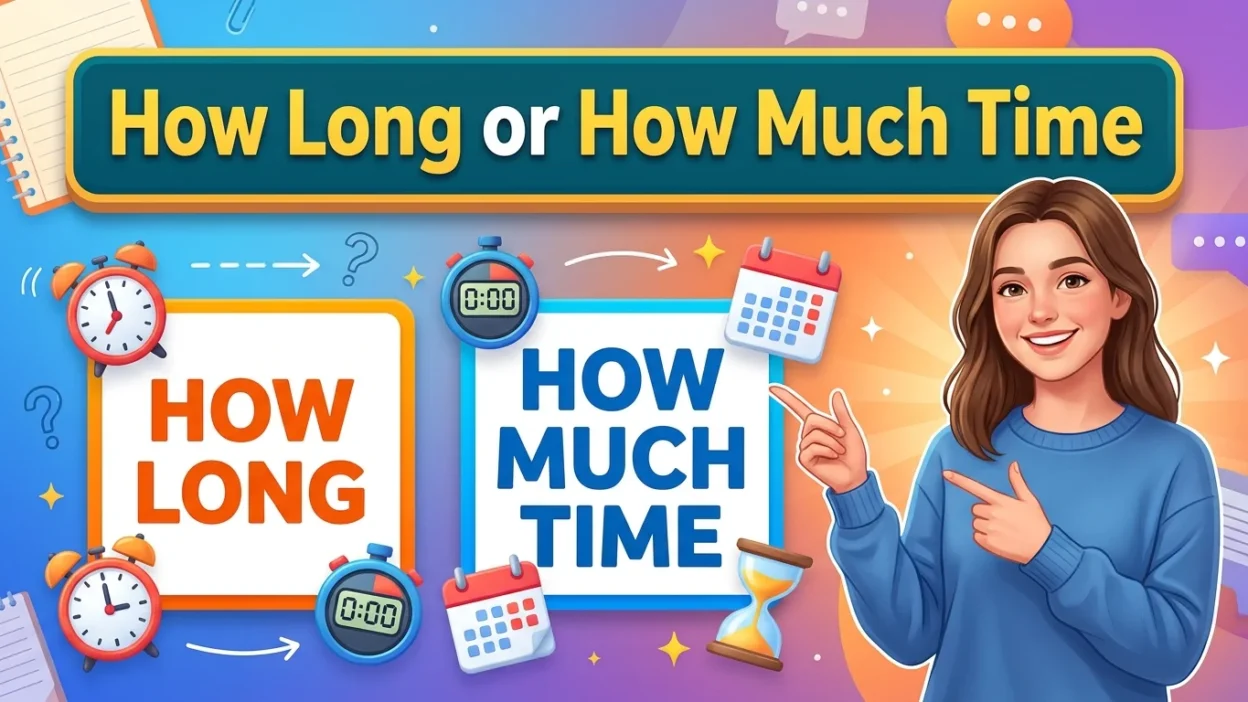
Choosing between “how long” and “how much time” can be confusing, especially for English learners. Both expressions are used when we want to ask about time, but they do not always sound equally natural. In everyday English, “how long” is usually the shorter and more natural choice when asking about duration.
For example, you can ask, “How long will the meeting take?” or “How much time will the meeting take?” Both sentences are grammatically possible, but the first one sounds more natural in most everyday conversations.
The difference becomes clearer when you look at the purpose of the question. “How long” usually asks about the duration of an activity, event, journey, or situation. “How much time” focuses more directly on the amount of time available, needed, used, or remaining.
Quick Answer :
“How long” and “how much time” can both ask about duration, but “how long” is generally more natural and common in everyday English.
Use “how long” when you want to know the duration of something.
- How long is the movie?
- How long will the journey take?
- How long have you lived here?
- How long does the lesson last?
Use “how much time” when you want to emphasize the amount of time that someone has, needs, spends, or has available.
- How much time do you have?
- How much time do we need?
- How much time did you spend studying?
- How much time is left?
A simple way to remember the difference is:
How long = What is the duration?
How much time = What amount of time?
In many situations, both can work. However, they may have slightly different meanings or emphasis.
What Does “How Long” Mean?
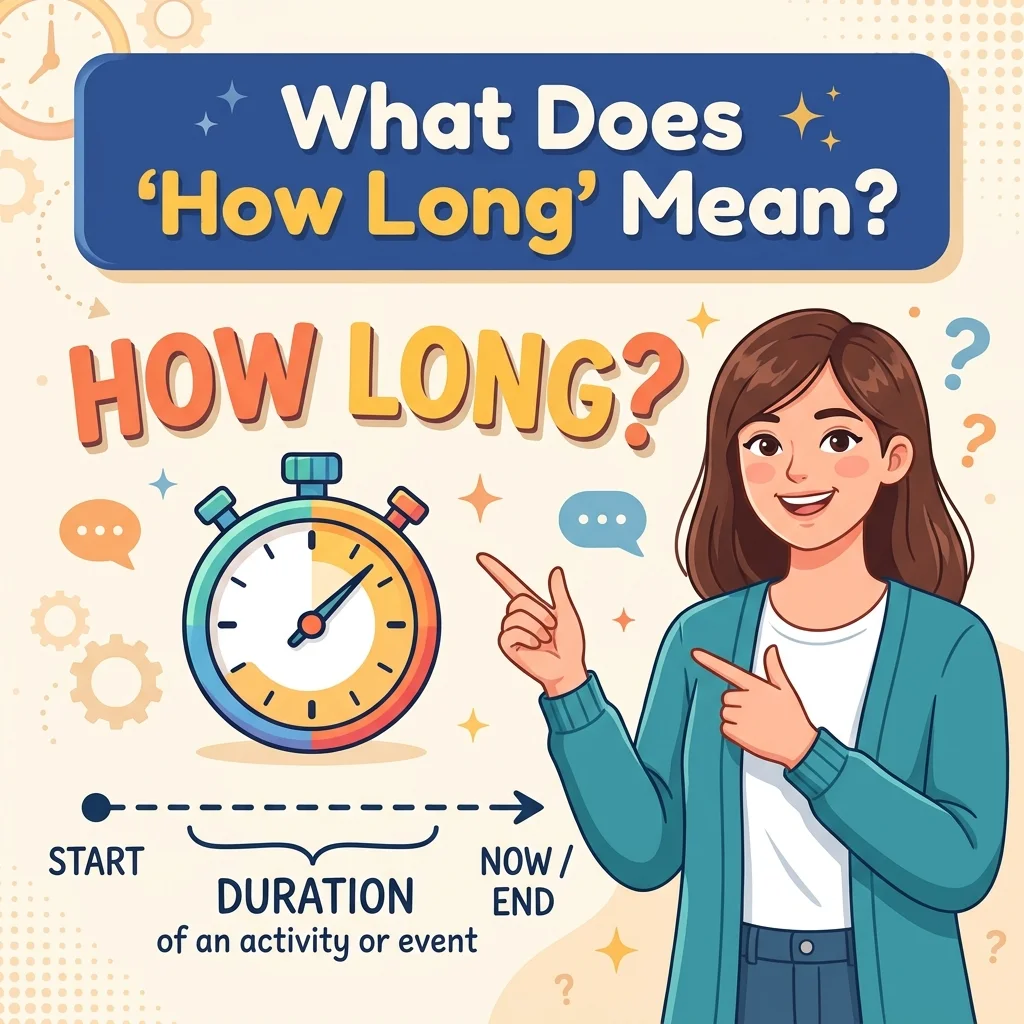
“How long” is a question expression used to ask about duration. It asks about the length of time something takes, continues, lasts, or has continued.
For example:
- How long is the movie?
- How long does the class last?
- How long will you stay?
- How long have you known him?
The answer normally gives a period of time.
For example:
Question: How long is the movie?
Answer: It is two hours long.
Question: How long will you stay?
Answer: I will stay for three days.
Question: How long have you worked here?
Answer: I have worked here for five years.
The expression “how long” is especially common because English speakers often use it as a simple way to ask about duration.
“How Long” for Activities
Use “how long” when asking how much time an activity takes.
Examples:
- How long does it take to cook rice?
- How long does the exam last?
- How long will it take to finish this work?
- How long does it take to get there?
- How long does the training session last?
The response can include minutes, hours, days, weeks, months, or years.
Example:
“How long does it take to charge the phone?”
“It takes about two hours.”
“How Long” for Events
You can also use “how long” to ask about the duration of an event.
Examples:
- How long is the concert?
- How long is the wedding ceremony?
- How long will the meeting be?
- How long was the interview?
- How long does the conference last?
Here, “how long” asks for the duration of the event.
“How Long” With the Present Perfect
“How long” is particularly common with the present perfect when asking about something that started in the past and continues into the present.
Examples:
- How long have you lived here?
- How long have you known Sarah?
- How long have they been married?
- How long have you worked at this company?
- How long has she been learning English?
You can answer with for or since.
For describes a period:
- I have lived here for five years.
- She has worked there for two months.
Since identifies the starting point:
- I have lived here since 2021.
- She has worked there since January.
What Does “How Much Time” Mean?
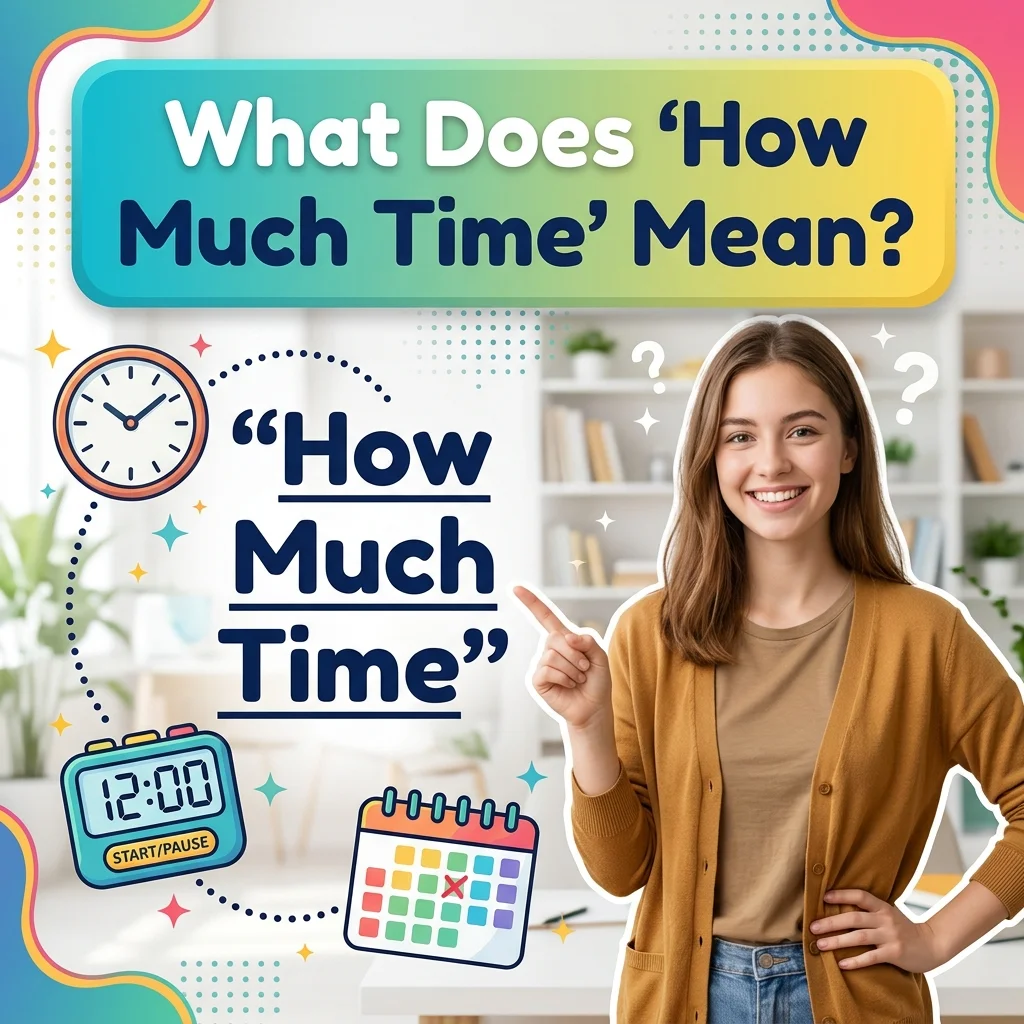
“How much time” asks about an amount of time. It treats time as an uncountable noun.
For example:
- How much time do you have?
- How much time do we need?
- How much time is left?
- How much time did you spend there?
- How much time should I give him?
The phrase often focuses on the quantity or amount of time rather than simply the duration of an event.
Consider this example:
How much time do you have?
The speaker wants to know how much time is available.
A natural answer might be:
I have about 30 minutes.
Another example is:
How much time do we need to complete the project?
The answer could be:
We need about two weeks.
Why Is “Time” Uncountable?
The word “time” can have different meanings in English. When we talk about time as a general concept or an amount of time, it is usually uncountable.
That is why we say:
- How much time?
- A lot of time
- Some time
- Little time
- Enough time
- Too much time
We normally do not say:
- How many time?
- Many time
However, times can be countable when it means occasions or instances.
For example:
- I have visited London three times.
- She called me several times.
- How many times have you seen that movie?
Here, times does not mean an amount of duration. It means occasions.
How Long vs. How Much Time
The main difference is focus.
“How long” focuses on duration.
“How much time” focuses on the amount of time.
Compare these examples:
| How Long | How Much Time |
| How long is the movie? | How much time do you have? |
| How long will the trip take? | How much time do we need? |
| How long have you lived here? | How much time did you spend there? |
| How long does the class last? | How much time is left? |
| How long will you stay? | How much time can you give me? |
Both expressions relate to time, but the question structure and emphasis can differ.
When Should You Use “How Long”?
Use “how long” when asking about the duration of something.
This is the most common choice in everyday English.
Asking About Duration
Use “how long” to ask how much time an activity or event lasts.
Examples:
- How long is the movie?
- How long is the flight?
- How long is the course?
- How long is the meeting?
- How long does the lesson last?
Asking How Long Something Takes
Use “how long” with take when asking about the duration needed for something.
Examples:
- How long does it take?
- How long does it take to cook dinner?
- How long will it take to repair the car?
- How long will it take to reach the airport?
- How long did it take you to finish the book?
This construction is extremely common in English.
Asking About a Stay
“How long” is also natural when asking about the length of someone’s stay.
Examples:
- How long are you staying?
- How long will you be in New York?
- How long are they staying with us?
- How long did you stay at the hotel?
You can answer:
- For two days.
- For a week.
- Until Friday.
- Three nights.
Asking About a Relationship or Situation
“How long” can describe the duration of a relationship or situation.
Examples:
- How long have you been friends?
- How long have you known each other?
- How long has he worked here?
- How long have they been together?
These questions often use the present perfect because the situation started in the past and continues now.
When Should You Use “How Much Time”?
Use “how much time” when you specifically want to ask about an amount of time.
Asking About Available Time
This is one of the most common uses.
Examples:
- How much time do you have?
- How much time do I have?
- How much time do we have before the train leaves?
- How much time is available?
- How much time can you spare?
The focus is on the amount of time someone has available.
Asking About Time Needed
You can use “how much time” when asking how much time something requires.
Examples:
- How much time do we need?
- How much time will you need?
- How much time should I allow?
- How much time does the project require?
- How much time will the repair take?
However, in casual conversation, “how long will it take?” is often more natural than “how much time will it take?”
Asking About Time Spent
“How much time” works well when talking about time someone spends doing something.
Examples:
- How much time do you spend studying?
- How much time did you spend on your phone?
- How much time does she spend exercising?
- How much time have you spent preparing?
- How much time do you spend with your family?
Here, the speaker focuses on the quantity of time spent.
Asking About Remaining Time
Use “how much time” when you want to know how much time remains.
Examples:
- How much time is left?
- How much time do we have left?
- How much time is remaining?
- How much time is left before the exam?
- How much time do I have before the deadline?
In everyday conversation, “How much time is left?” sounds very natural.
Can “How Long” and “How Much Time” Be Used Interchangeably?
Sometimes, yes.
For example:
How long will it take to finish the project?
and
How much time will it take to finish the project?
Both ask about the duration required to finish the project.
However, “How long will it take?” is usually more natural and concise.
Another example:
How long do you need?
How much time do you need?
Both can be correct.
The second version places slightly more emphasis on the amount of time required.
This is an important point for English learners: grammatically possible does not always mean equally natural in everyday English.
“How Long Do You Need?” vs. “How Much Time Do You Need?”
These two questions are very similar.
How Long Do You Need?
This is shorter and very common.
For example:
A: How long do you need to finish this?
B: I need about an hour.
How Much Time Do You Need?
This is also correct.
A: How much time do you need to finish this?
B: I need about an hour.
The difference is mainly one of emphasis and style.
“How long do you need?” sounds more direct and conversational.
“How much time do you need?” emphasizes the amount of time.
Neither is automatically wrong.
“How Long Does It Take?” vs. “How Much Time Does It Take?”
These expressions are also closely related.
How Long Does It Take?
This is the more common everyday expression.
Examples:
- How long does it take to get there?
- How long does it take to learn Spanish?
- How long does it take to cook this?
- How long does it take to charge the battery?
How Much Time Does It Take?
This is grammatically possible and can be useful when emphasizing the amount of time.
Examples:
- How much time does it take to complete the form?
- How much time does the process take?
- How much time does the task usually take?
In ordinary conversation, however, “How long does it take?” often sounds more natural.
How Long or How Much Time in Questions
Here are some common question patterns.
Questions With “How Long”
- How long is it?
- How long will it take?
- How long does it last?
- How long have you been waiting?
- How long have you lived here?
- How long will you stay?
- How long does the course take?
- How long is the flight?
Questions With “How Much Time”
- How much time do you have?
- How much time do we need?
- How much time is left?
- How much time did you spend?
- How much time can you give me?
- How much time should I allow?
- How much time is available?
- How much time do we have before the deadline?
Learning these patterns can help you choose the correct expression without translating every sentence from your first language.
Examples in Everyday Conversations
Example 1: At School
Teacher: How long is the exam?
Student: It is two hours long.
Here, the student wants to know the duration of the exam.
Example 2: Before an Exam
Student: How much time do we have left?
Teacher: You have 20 minutes.
Here, the focus is on the amount of remaining time.
Example 3: Traveling
A: How long will the flight take?
B: About eight hours.
This is a natural question about duration.
Example 4: Preparing Dinner
A: How long will dinner take?
B: About 30 minutes.
Again, “how long” asks about duration.
Example 5: Studying
A: How much time do you spend studying every day?
B: About three hours.
Here, “how much time” focuses on the amount of time spent.
Example 6: Meeting
A: How long will the meeting be?
B: Around one hour.
This asks about the meeting’s duration.
Example 7: Deadline
A: How much time do we have before the deadline?
B: We have three days.
The question focuses on available time.
How Long vs. How Much Time: Detailed Comparison
| Feature | How Long | How Much Time |
| Main purpose | Ask about duration | Ask about an amount of time |
| Commonness | Very common | Common in specific contexts |
| Everyday conversation | Very natural | Natural when focusing on quantity |
| Asking duration | Excellent choice | Possible |
| Asking available time | Sometimes possible | Very natural |
| Asking time spent | Possible | Very natural |
| Asking remaining time | Less common | Very natural |
| Asking how long something takes | Very natural | Correct but often less concise |
| Asking about ongoing situations | Very common | Less common |
| Asking about a deadline | Possible | Very natural |
Common Mistakes With “How Long” and “How Much Time”
English learners often make a few predictable mistakes when using these expressions.
Mistake 1: Saying “How Many Time?”
Incorrect:
How many time do you need?
Correct:
How much time do you need?
The reason is that time is uncountable when referring to an amount of duration.
Use much, not many.
Mistake 2: Using “How Much Times”
Incorrect:
How much times did you call me?
Correct:
How many times did you call me?
Here, times means occasions. It is countable.
Compare:
How much time did you spend there?
This asks about duration.
How many times did you go there?
This asks about the number of visits.
Mistake 3: Adding “For” After “How Long”
Learners sometimes say:
For how long did you stay?
This is grammatically possible, but it can sound more formal or marked than ordinary conversational English.
Usually, simply say:
How long did you stay?
Answer:
I stayed for three days.
Notice the difference:
Question: How long did you stay?
Answer: I stayed for three days.
Mistake 4: Using “How Long Time”
Incorrect:
How long time do you need?
Correct:
How long do you need?
or
How much time do you need?
Do not combine how long and time in this structure.
Mistake 5: Saying “How Much Long”
Incorrect:
How much long will it take?
Correct:
How long will it take?
“Long” already describes duration in this question structure.
Mistake 6: Confusing “How Long” With “How Many Times”
These expressions ask completely different questions.
How long did you visit Paris?
This asks about duration.
How many times did you visit Paris?
This asks about the number of visits.
For example:
I stayed in Paris for five days.
I visited Paris three times.
How to Answer “How Long”
When someone asks “How long?”, several answer patterns are possible.
Use “For” With a Duration
- For two hours
- For three days
- For five years
- For several weeks
- For a long time
Examples:
How long did you stay?
I stayed for three days.
How long have you worked here?
I have worked here for five years.
Use “Since” With a Starting Point
Use since when you mention when something started.
Examples:
- Since Monday
- Since 2020
- Since last summer
- Since January
- Since childhood
Example:
How long have you lived here?
I have lived here since 2020.
Remember:
for + duration
since + starting point
How to Answer “How Much Time”
When someone asks “How much time?”, you can answer with an amount or period.
Examples:
How much time do you have?
I have 20 minutes.
How much time do we need?
We need two hours.
How much time is left?
There are 15 minutes left.
You can also use phrases such as:
- Not much time
- Plenty of time
- Enough time
- A little time
- A lot of time
- Too much time
For example:
Don’t worry. We have plenty of time.
How Long or How Much Time in Formal English
Both expressions can appear in formal English, but the best choice depends on the sentence.
For example:
How long will the procedure take?
This is perfectly suitable for professional writing.
You could also write:
How much time will the procedure require?
The second version sounds more formal because require replaces the conversational take.
In reports and professional documents, you may see expressions such as:
- How much time is required?
- How much time is needed?
- What is the expected duration?
- How long will the process take?
For everyday English, however, “How long will it take?” is usually simple and natural.
How Long or How Much Time in Texting and Casual English
In texting and casual conversations, people usually prefer shorter expressions.
For example:
How long will you be?
is more natural than:
How much time will you take to arrive?
Similarly:
How long does it take?
is more common than:
How much time does it take?
However, “How much time do you have?” remains very natural in casual speech and texting.
For example:
How much time do you have before work?
I have about an hour.
How Long or How Much Time for Work and Business
Both expressions can be useful at work.
Examples with how long:
- How long will the meeting take?
- How long will the project last?
- How long have you worked on this?
- How long will the presentation be?
Examples with how much time:
- How much time do you need?
- How much time did you spend on the report?
- How much time do we have before the deadline?
- How much time should we allocate to this task?
The choice depends on what you want to emphasize.
If you ask about duration, “how long” is usually the natural choice.
If you ask about available, required, or spent time, “how much time” often works better.
How Long or How Much Time for Relationships
“How long” is especially common when discussing relationships.
Examples:
- How long have you been together?
- How long have you been married?
- How long have you known him?
- How long have you been friends?
- How long have they been dating?
Answers often use for or since.
How long have you been married?
We have been married for ten years.
How long have you known her?
I have known her since college.
You would not normally replace these questions with “how much time” in ordinary conversation.
How Long or How Much Time for Travel
Travel provides many useful examples.
Natural questions include:
- How long is the flight?
- How long will the journey take?
- How long does it take to get there?
- How long will you be away?
- How long are you staying?
You can also use “how much time” when discussing available time:
- How much time do we have before the train leaves?
- How much time do we have at the airport?
- How much time should we allow for traffic?
This difference is easy to see:
How long is the flight?
The answer describes the flight’s duration.
How much time do we have before the flight?
The answer describes the amount of available time before it happens.
How Long or How Much Time for Learning
When talking about learning, both forms can be useful.
How long does it take to learn English?
This asks about the expected duration of the learning process.
How much time do you spend learning English every day?
This asks about the amount of time spent each day.
Compare:
- How long does it take to learn English?
- How much time do you spend learning English?
The first question asks about the overall duration.
The second asks about daily time investment.
A Simple Trick to Remember the Difference
If you are unsure, ask yourself:
Am I asking about duration?
If yes, “how long” will often be the best choice.
How long is the class?
If you are asking about available, needed, remaining, or spent time, “how much time” will often be clearer.
How much time do you have?
Another useful shortcut is:
How long = duration
How much time = amount
This simple distinction will help you in most situations.
Quick Practice: Choose the Correct Expression
Try to choose how long or how much time.
Question 1
_____ does the movie last?
Answer: How long
Correct sentence:
How long does the movie last?
Question 2
_____ do you have before the meeting?
Answer: How much time
Correct sentence:
How much time do you have before the meeting?
Question 3
_____ have you lived here?
Answer: How long
Correct sentence:
How long have you lived here?
Question 4
_____ did you spend studying?
Answer: How much time
Correct sentence:
How much time did you spend studying?
Question 5
_____ will the repair take?
Answer: How long
Correct sentence:
How long will the repair take?
Question 6
_____ do we need to finish this task?
Answer: How much time
Correct sentence:
How much time do we need to finish this task?
More Example Sentences
Here are additional examples to help you understand the difference naturally.
Examples With “How Long”
- How long is the break?
- How long will the trip take?
- How long does the battery last?
- How long have you been waiting?
- How long has the shop been open?
- How long will the process take?
- How long does the course last?
- How long were you there?
- How long will you stay?
- How long does it take to walk there?
Examples With “How Much Time”
- How much time do you have?
- How much time do we have left?
- How much time do you need?
- How much time did you spend there?
- How much time should I allow?
- How much time can you give me?
- How much time is available?
- How much time did the task require?
- How much time do we have before lunch?
- How much time should we spend on this activity?
Is “How Long” More Natural Than “How Much Time”?
In many everyday questions about duration, “how long” is more natural and concise.
For example:
How long will it take?
sounds more conversational than:
How much time will it take?
Likewise:
How long is the meeting?
is a very natural way to ask about the meeting’s duration.
However, this does not mean “how much time” is incorrect. It is useful when the speaker wants to focus on an amount of time.
For example:
How much time do you have?
cannot simply be replaced with “How long do you have?” in every context without changing the emphasis.
Can You Say “How Much Time Is Needed?”
Yes. “How much time is needed?” is grammatically correct.
For example:
How much time is needed to complete the project?
This asks about the amount of time required.
You could also say:
How long will it take to complete the project?
The second sentence is generally more conversational.
Can You Say “How Long Time Is Needed?”
No.
“How long time is needed?” is not correct standard English.
Use:
How much time is needed?
or:
How long will it take?
This is one of the most common mistakes English learners should avoid.
How “Long” Works in These Questions
The word long can describe duration.
For example:
- a long meeting
- a long journey
- a long movie
- a long wait
- a long vacation
When you ask “How long?”, you are essentially asking about the length or duration.
For example:
The movie is three hours long.
Question:
How long is the movie?
Answer:
Three hours.
This makes the grammar easier to understand.
How “Much” Works With Time
The word much is used with uncountable nouns.
Because time can function as an uncountable noun when referring to duration, we say:
- much time
- little time
- enough time
- more time
- less time
- too much time
Examples:
We don’t have much time.
I need more time.
There isn’t enough time.
You spent too much time on that task.
This is why “how much time” is grammatically correct.
Common Spelling Tips
There are no unusual spelling changes in “how long” or “how much time.” However, learners sometimes confuse related words.
Remember:
- time — not “tim”
- long — not “lon”
- much — not “mush”
- duration — not “durasion”
- minutes — not “minuts”
- hours — not “ours”
Also remember that “how long” is written as two separate words.
Correct:
How long will you stay?
Not:
Howlong will you stay?
Similarly:
How much time do you need?
is written as three separate words.
Frequently Asked Questions
Is “how long” or “how much time” correct?
Both are grammatically correct, but they are used in slightly different ways. “How long” usually asks about duration, while “how much time” focuses on the amount of time available, needed, spent, or remaining.
Is “how long” more natural than “how much time”?
In many everyday questions about duration, yes. For example, “How long will it take?” is usually more natural and concise than “How much time will it take?”
However, “how much time” is very natural when asking about available or remaining time.
Can I say “how much time do you need”?
Yes. “How much time do you need?” is completely correct.
You can also say:
“How long do you need?”
Both questions can ask about the amount of time someone requires.
Can I say “how long do you have”?
Yes, but the meaning can depend on context. If you want to clearly ask about available time, “How much time do you have?” is usually the clearer choice.
Is “how long time” correct?
No. Do not say “how long time” in standard English.
Say:
How long will it take?
or:
How much time will it take?
Should I use “much” or “many” with time?
Use much when “time” means an amount of duration.
Correct:
How much time do you need?
Use many with times when you mean occasions.
Correct:
How many times did you call?
What is the difference between “how long” and “how many times”?
“How long” asks about duration.
“How many times” asks about the number of occasions.
For example:
How long did you stay? — I stayed for five days.
How many times did you visit? — I visited three times.
Is “for how long” grammatically correct?
Yes. “For how long?” is grammatically correct, but it can sound more formal or less conversational than simply “How long?”
For everyday English, “How long?” is usually the easier choice.
How do I ask how much time is remaining?
Use:
How much time is left?
For example:
How much time is left before the exam ends?
You can also say:
How much longer do we have?
How do I ask about the duration of a movie?
Use:
How long is the movie?
For example:
How long is the movie?
It is about two and a half hours long.
How do I ask about the time required for a task?
The most natural everyday question is often:
How long will it take?
You can also say:
How much time will it take?
Both are grammatically acceptable.
How do I ask about time spent on something?
Use “how much time” when you want to emphasize the amount of time spent.
For example:
How much time did you spend studying?
You could also use “how long” in some contexts:
How long did you study?
Both can be correct, but the first explicitly emphasizes the amount of time.
Is “how much time” formal?
Not necessarily. It is common in everyday English.
For example:
How much time do you have?
is a very ordinary conversational question.
Is “how long” used only for time?
No. “How long” can also ask about physical length.
For example:
How long is the table?
Here, it asks about physical length rather than duration.
The context tells you whether long refers to physical length or time.
Conclusion :
In many cases, both expressions can communicate a similar idea. The important difference is the focus. “How long” usually sounds shorter and more natural when asking about duration. “How much time” draws attention to the quantity of time.
Once you understand this distinction, choosing between the two becomes much easier. When you are asking about the length of an activity or event, start with “how long.” When you are thinking about the amount of available, required, remaining, or spent time, “how much time” is often the better fit.

Emily Parker is a dedicated writer who enjoys creating clear, useful, and easy-to-understand content. She focuses on language, grammar, word meanings, and everyday expressions to help readers find simple and reliable answers.