Choosing between Emasculate vs Demasculate can be confusing, especially when you come across both words in writing or conversation.
They look and sound similar, but they do not have the same status or usage in standard English. Understanding the difference can help you avoid using an uncommon or incorrect form when you want to describe someone being deprived of masculine qualities, strength, or confidence.
Emasculate is the established English word and can be used as a verb or adjective. As a verb, it can mean to deprive a man of his male power or characteristics, while in broader usage it can describe making someone feel less powerful or authoritative.
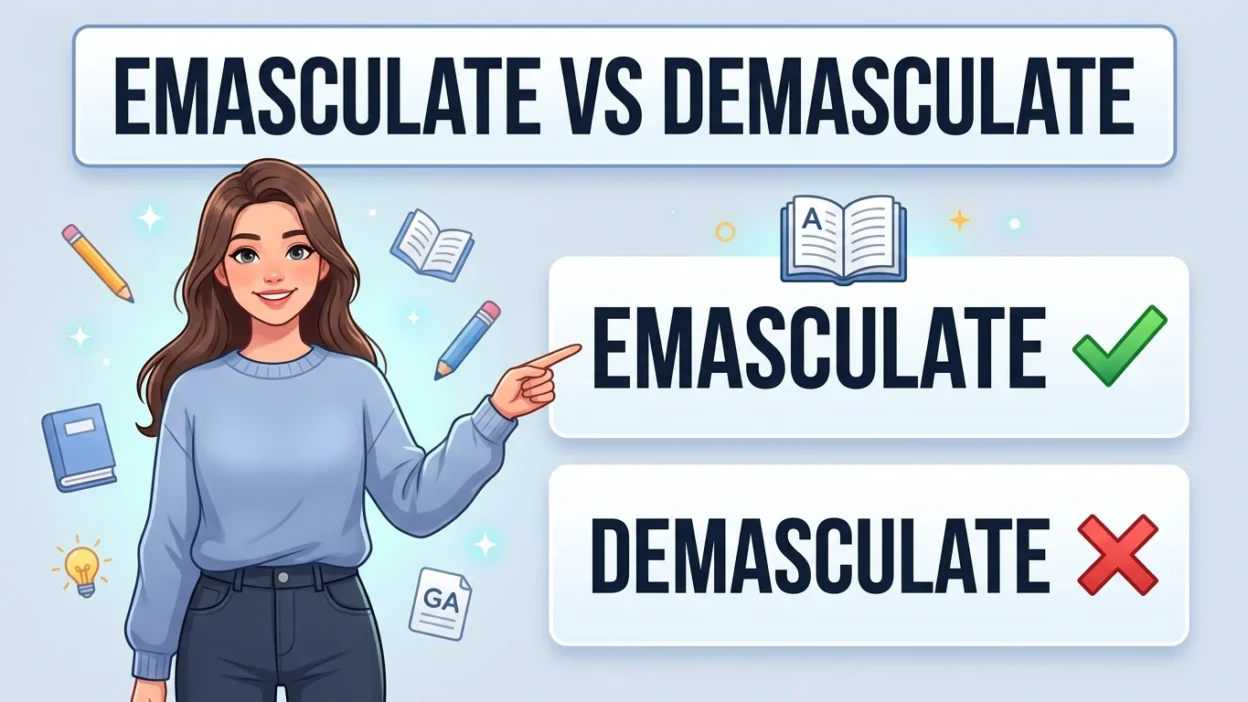
Emasculate vs Demasculate: Quick Answer
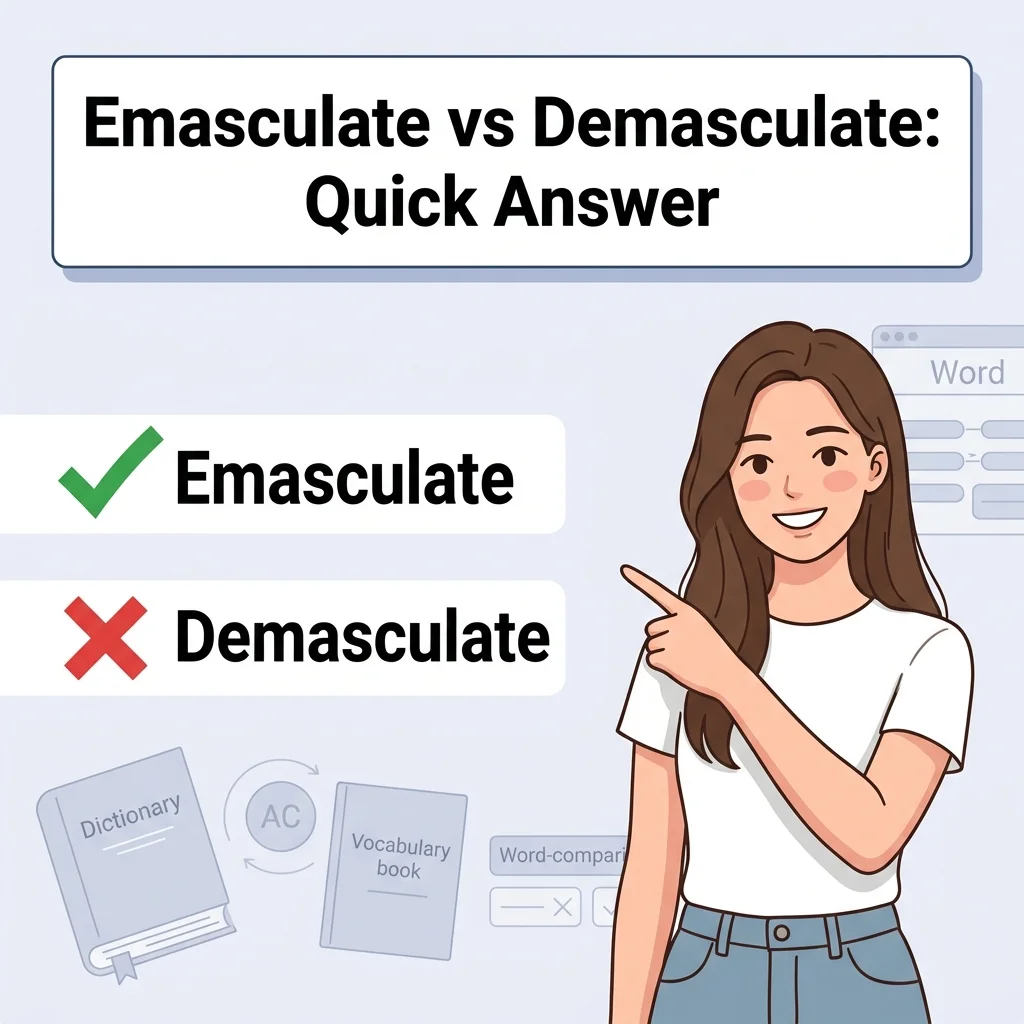
The simplest answer is that emasculate is the standard English word and is far more common than demasculate.
Emasculate can mean to castrate a male, remove or reduce masculine qualities, or make someone feel weak, powerless, or less confident.
Demasculate is a rare and uncommon term. It is not normally needed in ordinary English writing or conversation.
| Word | Common in Modern English? | Main Meaning | Recommended Usage |
| Emasculate | Yes | To castrate, weaken masculine qualities, or undermine confidence/power | Use normally |
| Demasculate | Very rare | A rare term related to removing masculine qualities | Usually avoid |
| Emasculation | Yes | The act or condition of being emasculated | Common noun |
| Demasculation | Extremely rare | Rare noun form related to demasculate | Generally unnecessary |
If you are unsure which word to choose, emasculate is almost always the better option.
What Does “Emasculate” Mean?
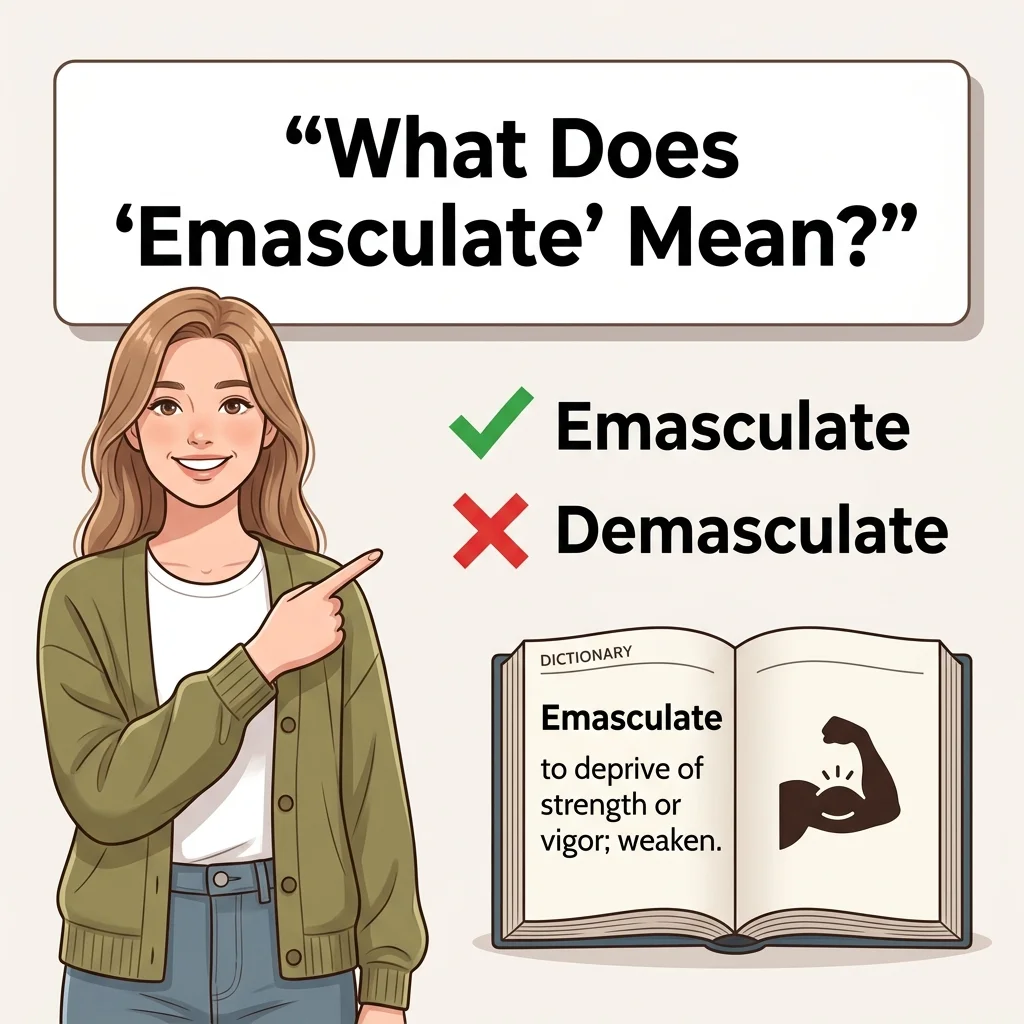
Emasculate is a verb with several related meanings.
Its literal meaning is to castrate a male, meaning to remove the testicles or otherwise make a male incapable of normal reproductive function.
However, the word is also frequently used figuratively. In this sense, emasculate means to make someone feel less masculine, less powerful, less confident, or less capable.
For example:
The criticism made him feel emasculated.
This does not necessarily mean that anything physical happened to him. Instead, the sentence suggests that the criticism made him feel that his confidence, authority, masculinity, or sense of competence had been damaged.
Another example is:
He felt emasculated after being publicly embarrassed.
Here, emasculated describes an emotional or psychological experience.
Literal Meaning of Emasculate
In its literal sense, emasculate refers to removing male reproductive organs or reproductive capability.
For example:
The procedure was intended to emasculate the animal.
This is a biological or medical meaning.
Because the word can refer to a sensitive physical procedure, context matters.
Figurative Meaning of Emasculate
In figurative English, emasculate can mean to weaken someone’s confidence, authority, strength, or traditionally masculine identity.
For example:
Losing his position made him feel emasculated.
The sentence suggests that the person felt less powerful or capable because of what happened.
Another example:
The constant criticism began to emasculate him.
Here, the word describes the emotional effect of repeated criticism.
What Does “Demasculate” Mean?
Demasculate is a very uncommon word.
It is formed with the prefix de- and the word masculate, and its meaning is generally associated with removing or reducing masculine characteristics.
However, native English speakers do not commonly use demasculate in everyday communication. If you search modern writing, you are much more likely to encounter emasculate, emasculation, emasculated, or phrases such as make someone feel less masculine.
For this reason, using demasculate can make a sentence sound unusual or unnecessarily complicated.
For example:
The experience emasculated him.
This sounds natural.
Compare it with:
The experience demasculated him.
The second sentence sounds unusual to most English readers.
When your goal is clear, natural English, emasculate is normally the better choice.
Is “Demasculate” a Correct Word?
This question can be confusing because rare words can sometimes appear in dictionaries or historical sources without being common in contemporary English.
Demasculate is extremely rare, but the main issue is not simply whether the word can be found somewhere. The more important question is whether it is the normal word used by modern English speakers and writers.
In ordinary modern English, emasculate is the established choice.
Therefore, if you are writing:
- a school assignment
- a blog post
- an article
- a professional email
- an academic paper
- a social media post
- a business document
you should generally choose emasculate instead of demasculate.
Simple Rule
Remember this:
Use “emasculate” when you mean to weaken, castrate, or deprive someone of traditionally masculine power or qualities.
You will rarely need demasculate.
Emasculate vs Demasculate: Main Difference
The biggest difference between these words is frequency and standard usage.
Emasculate is a recognized, established, and commonly understood English word.
Demasculate is extremely uncommon and generally unnecessary in modern writing.
The meanings may overlap, but the words do not have equal status in everyday English.
| Feature | Emasculate | Demasculate |
| Part of speech | Verb | Verb |
| Modern usage | Common | Very rare |
| Meaning | Castrate or weaken masculine qualities/power | Related to removing masculine qualities |
| Familiar to readers | Yes | Usually no |
| Natural in everyday English | Yes | No |
| Recommended | Yes | Usually avoid |
So, when choosing between the two, emasculate is the clear winner for normal modern English.
Emasculate as a Verb
Emasculate is primarily used as a verb.
Its basic forms are:
- Emasculate
- Emasculates
- Emasculated
- Emasculating
- Emasculation
For example:
The experience emasculated him.
Here, emasculated is the past-tense form.
Another example:
Constant criticism can emasculate a person.
Here, emasculate is the base form.
You can also use the present participle:
He worried that the situation was emasculating him.
Examples of Emasculate as a Verb
- The insult seemed to emasculate him.
- Losing his job made him feel emasculated.
- The criticism emasculated the young manager.
- He did not want to be emasculated in front of his colleagues.
- The character feels emasculated by his lack of control.
- The experience left him feeling emasculated.
- The surgery was intended to emasculate the animal.
- Public humiliation can emasculate a person’s confidence.
The exact meaning depends on the context.
Emasculated: What Does It Mean?
Emasculated is the past-tense and past-participle form of emasculate.
It can describe someone who has been physically castrated, but in everyday figurative writing, it often describes someone who feels weak, powerless, humiliated, or less masculine.
For example:
He felt emasculated when his coworkers laughed at his mistake.
This sentence describes an emotional reaction.
It does not necessarily mean that anyone physically harmed him.
Another example:
She worried that the criticism had left him feeling emasculated.
Again, the meaning is psychological or emotional.
Emasculation: The Noun Form
The noun form of emasculate is emasculation.
Emasculation means the act or process of emasculating someone or something.
It can refer to literal castration, but it can also describe a figurative loss of power, confidence, authority, or masculinity.
For example:
He described the experience as a form of emasculation.
Another example:
The character’s emasculation becomes an important part of the story.
In literary analysis, emasculation is sometimes used to describe a character’s loss of control, authority, independence, or masculine identity.
How “Emasculate” Is Used Figuratively
The figurative meaning is especially important because modern writers frequently use emasculate in this way.
Suppose a man has always been the main decision-maker in his family. Suddenly, he loses his job and becomes financially dependent on someone else.
He might say:
Losing my job made me feel emasculated.
The speaker is not saying that anything physical happened. He is describing a feeling of reduced confidence, independence, or traditional masculine identity.
Another example:
Being constantly ignored by his team made him feel emasculated.
Again, the word describes a perceived loss of authority or effectiveness.
The figurative use often involves ideas such as:
- confidence
- authority
- independence
- strength
- masculinity
- social status
- control
- effectiveness
However, context is essential because emasculate can sound emotionally strong.
Emasculate vs Castrate
These words can overlap, but they are not always interchangeable.
Castrate specifically refers to removing the testicles or causing a male to become unable to reproduce through such physical means.
Emasculate can have that literal meaning, but it has a broader figurative meaning as well.
For example:
The animal was castrated.
This is a direct biological description.
But:
He felt emasculated by the criticism.
This is figurative.
You generally would not replace the second sentence with:
He felt castrated by the criticism.
Although the metaphor may be understandable, it changes the tone and can sound much harsher.
Emasculate vs Humiliate
Emasculate and humiliate are also different.
To humiliate someone means to make them feel deeply embarrassed, ashamed, or degraded.
To emasculate someone figuratively means to make them feel less powerful, capable, masculine, or authoritative.
A person can be humiliated without feeling emasculated.
For example:
He was humiliated when he forgot the speaker’s name.
That does not necessarily involve masculinity or power.
However:
He felt emasculated when his authority was publicly challenged.
This focuses more on perceived power and confidence.
Emasculate vs Weaken
Weaken is much broader than emasculate.
You can weaken:
- a person
- a building
- an argument
- a relationship
- a business
- a material
- a system
But emasculate has a much more specific history and emotional meaning.
For example:
The scandal weakened the company.
This does not imply anything about masculinity.
But:
The public criticism emasculated the leader.
This suggests that the criticism affected the person’s sense of authority, confidence, or masculinity.
Therefore, weaken is not always a direct replacement for emasculate.
Emasculate vs Demasculate in a Sentence
Let’s compare the two words directly.
With Emasculate
The criticism emasculated him.
This is natural and easily understood.
With Demasculate
The criticism demasculated him.
This is unusual and may distract the reader.
Another comparison:
Losing his position made him feel emasculated.
This is natural modern English.
Compared with:
Losing his position made him feel demasculated.
The second sentence sounds unfamiliar and unnecessary.
The practical lesson is simple: use emasculate unless you have a specific reason to use the rare form demasculate.
Common Mistakes With Emasculate
There are several mistakes learners can make when using this word.
Mistake 1: Assuming Emasculate Only Means Castrate
Some people believe emasculate can only describe a physical procedure.
That is not correct.
It can also have a figurative meaning.
For example:
His constant failures made him feel emasculated.
This sentence is perfectly understandable because the word is being used figuratively.
Mistake 2: Using Demasculate in Normal Conversation
Because demasculate looks like a logical opposite or variation of emasculate, writers may assume it is the preferred form.
However, modern English overwhelmingly favors emasculate.
Instead of writing:
The experience demasculated him.
write:
The experience emasculated him.
Mistake 3: Using Emasculate for Every Kind of Weakness
The word should not automatically replace weaken.
For example:
The storm emasculated the building.
This sounds incorrect because there is no meaningful connection to the word’s usual figurative sense.
A better sentence is:
The storm weakened the building.
Mistake 4: Ignoring Context
Because emasculate has both literal and figurative meanings, you should make sure the context makes your intended meaning clear.
For example:
The procedure emasculated the animal.
This may be understood literally.
But:
His failure emasculated him.
This is clearly figurative.
Is Emasculate a Negative Word?
Usually, emasculate carries a negative or uncomfortable meaning.
When it describes a person figuratively, it often suggests that someone feels weakened, humiliated, powerless, or less masculine.
For example:
He felt emasculated after being publicly criticized.
The word communicates more than simple disappointment.
However, the emotional strength depends on context.
In academic or literary writing, emasculation may be used analytically without directly insulting someone.
For example:
The novel explores the protagonist’s emasculation after he loses his social status.
Here, the word is being used as part of literary analysis.
Is Emasculate Offensive?
The word itself is not automatically offensive, but it can be sensitive because it is connected to masculinity and male identity.
When you describe someone as emasculated, you are often suggesting that they have experienced a loss of masculine power, confidence, or authority.
That can be emotionally loaded.
For professional or sensitive communication, consider whether a more neutral word would communicate your point better.
Instead of:
He was emasculated by the situation.
you might say:
He felt powerless because of the situation.
Or:
The situation damaged his confidence.
The best choice depends on what you actually mean.
Synonyms for Emasculate
The best synonym depends on the context.
Literal Synonyms
When discussing the physical meaning, possible related terms include:
- castrate
- sterilize
- neuter
However, these words are not always exact substitutes. Their meanings and appropriate contexts differ.
Figurative Synonyms
When emasculate means to weaken confidence or authority, possible alternatives include:
- weaken
- undermine
- disempower
- humiliate
- belittle
- discourage
- undermine confidence
- make powerless
- diminish
- devalue
For example:
The criticism emasculated him.
Could become:
The criticism undermined his confidence.
Or:
The criticism made him feel powerless.
These alternatives may sound more neutral.
Antonyms of Emasculate
The opposite of emasculate depends on the intended meaning.
For its figurative meaning, possible opposites include:
- empower
- strengthen
- encourage
- reinforce
- support
- boost
- strengthen confidence
For example:
The team leader’s encouragement empowered him.
This expresses an idea opposite to feeling emasculated.
Another example:
Her support strengthened his confidence.
Again, this contrasts with the idea of emasculation.
Pronunciation of Emasculate
Emasculate is pronounced approximately:
ih-MAS-kyuh-layt
The stress usually falls on the second syllable.
The word can look complicated when you first see it, but breaking it into smaller parts makes pronunciation easier:
e-mas-cu-late
The related forms include:
- emasculated
- emasculating
- emasculation
Learning the pronunciation can help you feel more comfortable using the word in conversation.
Is Emasculate a Verb or Adjective?
Emasculate is primarily a verb.
For example:
The experience emasculated him.
The word emasculated can function as a past participle and may appear in adjective-like constructions.
For example:
He felt emasculated.
Here, emasculated describes his emotional state.
The noun is:
emasculation
So the basic word family looks like this:
| Form | Word |
| Verb | emasculate |
| Past tense | emasculated |
| Present participle | emasculating |
| Noun | emasculation |
| Related adjective-like form | emasculated |
Word Origin of Emasculate
Emasculate comes from Latin roots associated with being made male or masculine and from masculus, meaning “male.”
Over time, English developed the word to describe literal removal of male reproductive capability and then extended its meaning metaphorically.
This is common in English. Words often begin with a physical meaning and later develop figurative meanings.
Today, emasculate can therefore operate on two levels:
- A literal physical meaning.
- A figurative emotional or social meaning.
Understanding this history helps explain why the word is associated with both biology and feelings of power or masculinity.
Why Does “Demasculate” Sound Logical?
At first glance, demasculate may seem more logical to some learners.
The prefix de- often means to remove, reverse, or reduce something. Therefore, someone might reason that:
de + masculate = remove masculinity
That reasoning makes the word look plausible.
However, English vocabulary is not always created through perfectly predictable formulas. A word can look grammatically logical but still be uncommon or nonstandard in actual modern usage.
This is why simply creating a word from familiar prefixes is not always reliable.
For practical writing, the established word is emasculate.
Emasculate vs Demasculate: Which One Should You Use?
If you are choosing between the two, use emasculate in almost every ordinary situation.
For example:
The experience made him feel emasculated.
This is clear and natural.
If you write:
The experience made him feel demasculated.
many readers may find the wording strange.
Unless you are discussing a specific historical, lexical, or specialized source that deliberately uses demasculate, there is little reason to choose it.
Examples of Emasculate in Everyday Writing
Here are some natural examples.
Example 1
Losing his job made him feel emasculated.
The word describes a perceived loss of confidence or traditional masculine identity.
Example 2
Public criticism can emasculate someone who already lacks confidence.
Here, emasculate means to weaken confidence or a sense of authority.
Example 3
He felt emasculated when his decision was rejected in front of everyone.
This focuses on embarrassment and loss of authority.
Example 4
The character experiences emasculation after losing control of his career.
This example works well in literary analysis.
Example 5
Constantly questioning his abilities made him feel emasculated.
The word describes an emotional effect.
Example 6
The manager did not want to emasculate his employees by criticizing them publicly.
Here, the word describes an attempt to avoid damaging confidence or authority.
Example 7
The novel explores the protagonist’s feelings of emasculation.
This is a natural academic or literary use.
Example 8
He worried that asking for help would make him feel emasculated.
This describes a personal perception of masculinity and independence.
20 Example Sentences With Emasculate
- The criticism made him feel emasculated.
- Losing his job left him feeling emasculated.
- He felt emasculated after his authority was challenged.
- Public embarrassment can make someone feel emasculated.
- The character struggles with feelings of emasculation.
- He did not want the failure to emasculate him.
- Constant comparison made him feel emasculated.
- The experience seriously affected his confidence.
- The novel examines the protagonist’s emasculation.
- He felt emasculated when his efforts were dismissed.
- The manager avoided humiliating his employees publicly.
- Losing control over the situation made him feel emasculated.
- The character believes that asking for help will emasculate him.
- His lack of authority contributed to his feeling of emasculation.
- The criticism was not intended to emasculate him.
- He described the incident as deeply emasculating.
- The story focuses on masculinity and emasculation.
- Repeated failures can make some people feel emasculated.
- His confidence recovered after receiving support.
- The experience challenged his sense of strength and authority.
Emasculate vs Demasculate: Common Search Questions
People often search for this word pair because the two terms look almost interchangeable.
Here are some of the most important questions.
Is Emasculate the Correct Word?
Yes. Emasculate is the standard and widely recognized English word.
It can mean to castrate someone or something literally, or to weaken a person’s confidence, authority, or sense of masculinity figuratively.
Is Demasculate a Real Word?
Demasculate is extremely rare. Although rare formations can sometimes appear in historical or specialized sources, it is not the normal modern English choice.
For standard writing, use emasculate.
What Is the Difference Between Emasculate and Demasculate?
The main difference is usage. Emasculate is established and common, while demasculate is extremely uncommon.
Their meanings can overlap, but they are not equally natural in contemporary English.
Should I Use Demasculate in an Essay?
Generally, no.
If you mean that someone was made to feel less powerful, masculine, confident, or authoritative, emasculate is the clearer and more established choice.
Does Emasculate Mean Weak?
It can imply weakness in a figurative context, but it has a more specific meaning than simply weak.
For example:
The criticism emasculated him.
This suggests that the criticism affected his confidence, authority, masculinity, or sense of power.
Does Emasculate Mean Castrate?
Yes, emasculate can have a literal meaning related to castration or removal of male reproductive capability.
However, it is also widely used figuratively.
Can Women Be Emasculated?
Yes, the word can be used more broadly in figurative language to describe someone being deprived of power, authority, or effectiveness. However, its traditional figurative association is particularly connected to masculinity.
Context determines whether the word is appropriate.
What Is the Noun of Emasculate?
The noun is emasculation.
For example:
The story explores his emasculation after losing his position.
What Is the Adjective Form of Emasculate?
Emasculated is commonly used as a participial adjective.
For example:
He felt emasculated by the criticism.
You may also encounter emasculating when describing something that causes the feeling.
For example:
The experience was emasculating.
What Is the Opposite of Emasculate?
For figurative use, possible opposites include empower, strengthen, encourage, and reinforce.
For example:
Her support empowered him.
This expresses an idea opposite to making someone feel emasculated.
Is Emasculate a Negative Word?
It can be. Figuratively, it often suggests that someone has experienced a loss of confidence, power, authority, or masculinity.
Therefore, use it carefully when describing real people.
Can Emasculate Be Used in Formal Writing?
Yes. Emasculate is a standard English word and can be used in formal, academic, professional, and literary writing when the meaning fits.
Is Demasculate Better Than Emasculate?
No. For ordinary modern English, emasculate is the better choice.
Demasculate is too uncommon for most everyday writing.
Quick Grammar Guide
If you need a simple reference, remember the following:
| Question | Answer |
| Which word is standard? | Emasculate |
| Is emasculate a verb? | Yes |
| Is emasculation a noun? | Yes |
| Is emasculated commonly used? | Yes |
| Is demasculate common? | No |
| Can emasculate be literal? | Yes |
| Can emasculate be figurative? | Yes |
| Can emasculate describe loss of confidence? | Yes |
| Should beginners normally use demasculate? | No |
| Best general choice? | Emasculate |
How to Remember the Difference
You do not need a complicated memory trick.
Just remember:
Emasculate = the standard word.
If you want to describe someone being made to feel less powerful, confident, masculine, or authoritative, use emasculate.
If you encounter demasculate, recognize that it is an unusual and rarely used term.
Another useful strategy is to remember the common word family:
emasculate → emasculated → emasculating → emasculation
These forms are much more useful in everyday English.
Conclusion
The difference between emasculate vs demasculate becomes much easier once you focus on modern usage rather than simply looking at how the words are constructed.
Emasculate is the established English word. It can have a literal meaning related to castration, but it is also commonly used figuratively to describe a loss of confidence, authority, power, effectiveness, or traditionally masculine identity.

Emily Parker is a dedicated writer who enjoys creating clear, useful, and easy-to-understand content. She focuses on language, grammar, word meanings, and everyday expressions to help readers find simple and reliable answers.