Choosing between two similar-looking words can be confusing, especially when you hear them often in everyday conversations.
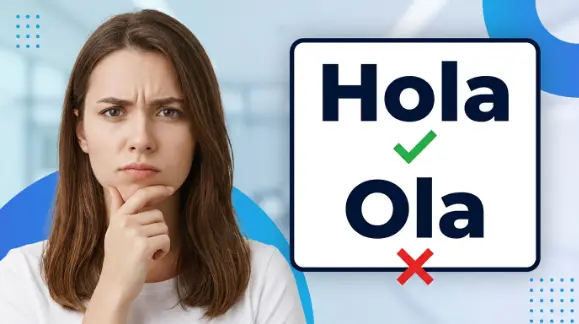
Is It Hola or Ola is a common question because both words appear in writing and can sound similar, but they do not have the same meaning or usage.
The word hola is a Spanish greeting that means “hello” or “hi.” You may see it in Spanish conversations, texts, social media posts, or when someone wants to greet another person casually.
Hola vs Ola: Quick Answer
The short answer is simple:
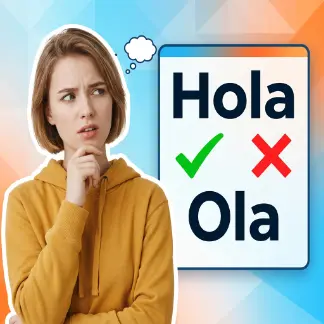
Hola means “hello” in Spanish.
Ola means “wave” in Spanish.
So, if you are greeting someone, always use hola.
| Word | Meaning | Correct for greeting? | Example |
| Hola | Hello / Hi | Yes | Hola, ¿cómo estás? |
| Ola | Wave | No | La ola es grande. |
| ¡Hola! | Hello! / Hi! | Yes | ¡Hola, amigo! |
| ¡Ola! | Wave! | No | Incorrect as a greeting |
The easiest rule is:
Hello = Hola. Wave = Ola.
The only spelling difference is the letter h, but that single letter completely changes the meaning.
What Does “Hola” Mean?
Hola is the standard Spanish word for “hello” or “hi.”
It is used as a greeting when speaking to another person. You can use it in casual conversations, friendly messages, phone calls, social media chats, and many everyday situations.
For example:
Hola, María.
This means:
Hi, María.
You can also combine hola with other Spanish expressions:
- Hola, ¿cómo estás? — Hello, how are you?
- Hola, buenos días. — Hello, good morning.
- Hola, amigo. — Hi, friend.
- Hola, ¿qué tal? — Hi, how are you?
- Hola, mucho gusto. — Hello, nice to meet you.
Unlike some greetings that are limited to particular situations, hola is very flexible.
You can use it when meeting someone for the first time, greeting a friend, starting an online conversation, or simply getting someone’s attention.
What Does “Ola” Mean?
Ola is also a correct Spanish word, but it has nothing to do with saying hello.
In Spanish, ola generally means “wave.”
For example:
La ola es muy grande.
This means:
The wave is very big.
The word can describe a wave in the sea or another body of water. It can also appear in expressions involving waves or a series of events.
Here are some examples:
- La ola llegó a la playa. — The wave reached the beach.
- Vi una ola enorme. — I saw a huge wave.
- La ola era muy fuerte. — The wave was very strong.
- Los niños jugaron con las olas. — The children played with the waves.
- Una ola golpeó el barco. — A wave hit the boat.
Therefore, ola is not a misspelled version of hola. It is a real Spanish word with its own meaning.
Is “Hola” or “Ola” Correct for Hello?
If you want to say hello, the correct word is hola.
The spelling is:
H-O-L-A
Not:
O-L-A
The h in Spanish hola is silent. This is one reason English speakers and Spanish beginners sometimes leave it out.
Even though you do not hear the h when the word is pronounced, you still need to write it.
Correct
Hola, ¿cómo estás?
Incorrect
Ola, ¿cómo estás?
The first sentence correctly uses the Spanish word for hello.
The second sentence technically uses the Spanish word ola, which means “wave,” so it does not function as the intended greeting.
Why Is the “H” in Hola Important?
The letter h in hola is silent in standard Spanish pronunciation.
This means you do not pronounce the h the way you normally pronounce an English h in words such as house, happy, or hello.
As a result, hola can sound very similar to ola.
However, spelling and pronunciation are not always identical.
English has similar examples. For instance, the k in know is silent, but you still need to write it. Likewise, the h in hola is written even though it is not pronounced.
So, if you hear someone say hola, do not assume the correct spelling is ola.
The silent letter is still part of the word.
How Do You Pronounce “Hola”?
For English speakers, hola is commonly approximated as:
OH-lah
The first syllable sounds like “oh,” followed by “lah.”
The h is silent.
So:
Hola → OH-lah
You do not pronounce it like the English word “hola” would be pronounced if the h had an English sound.
For example:
Hola, amigo.
can be approximately pronounced:
OH-lah, ah-MEE-goh.
Spanish pronunciation has details that vary depending on the speaker and region, but remembering that the h is silent is an important starting point.
Hola vs Ola: Main Difference
The biggest difference between hola and ola is their meaning.
Hola is a greeting.
Ola refers to a wave.
The two words may sound almost the same because the Spanish h is silent. However, they are different words with different meanings.
| Feature | Hola | Ola |
| Language | Spanish | Spanish |
| Meaning | Hello / Hi | Wave |
| H included? | Yes | No |
| H pronounced? | No | Not applicable |
| Used as greeting? | Yes | No |
| Common context | Conversation | Ocean, water, waves |
| Example | Hola, Ana. | La ola es grande. |
A simple memory trick is:
H = Hello → Hola
This is not a linguistic rule, but it can help English speakers remember the spelling.
Hola and Ola in Example Sentences
Seeing both words in context makes their difference much easier to understand.
Examples With “Hola”
Hola, ¿cómo estás?
Hello, how are you?
Hola, Carlos.
Hi, Carlos.
Hola, buenos días.
Hello, good morning.
Hola, mucho gusto.
Hello, nice to meet you.
Hola, ¿qué haces?
Hi, what are you doing?
Examples With “Ola”
La ola es enorme.
The wave is enormous.
Una ola golpeó la playa.
A wave hit the beach.
Vi una ola muy grande.
I saw a very big wave.
Las olas están fuertes hoy.
The waves are strong today.
La ola cubrió parte de la arena.
The wave covered part of the sand.
The context makes the difference clear.
Can “Ola” Mean Hello?
No, ola does not mean “hello” in standard Spanish.
If your goal is to greet someone, write hola.
It is possible that someone might type ola in a casual text because they accidentally omitted the silent h. A Spanish speaker may still understand the intended meaning from the conversation.
However, that does not make ola the standard spelling for “hello.”
For correct Spanish writing, use:
Hola.
Not:
Ola.
This distinction becomes especially important in schoolwork, translations, websites, professional communication, and language learning.
Is “Hola” a Formal or Informal Greeting?
Hola can be used in both casual and relatively formal situations.
It is a general greeting rather than a strongly formal expression.
For example, you can say:
Hola, ¿cómo estás?
to a friend.
You can also say:
Hola, mucho gusto.
when meeting someone for the first time.
In a more formal situation, Spanish speakers may use greetings such as buenos días, buenas tardes, or buenas noches, depending on the time and context.
Still, hola itself is completely normal and widely understood.
Hola vs Buenos Días
Beginners sometimes wonder whether hola and buenos días can be used in the same situations.
They are both greetings, but they are not identical.
Hola means:
Hello / Hi
Buenos días means:
Good morning
For example:
Hola, ¿cómo estás?
means:
Hello, how are you?
While:
Buenos días, señor.
means:
Good morning, sir.
You can also combine them:
Hola, buenos días.
This can be a perfectly natural greeting.
Hola vs Ola in Text Messages
The difference between hola and ola becomes especially important in texting.
When people type quickly, they may accidentally leave out the h.
For example:
Ola, ¿qué haces?
A Spanish speaker may understand that the writer intended:
Hola, ¿qué haces?
But if you are learning Spanish or trying to write correctly, you should not copy this mistake.
Use:
Hola, ¿qué haces?
The same principle applies to social media comments, emails, online messages, captions, and other written communication.
Casual texting often contains spelling shortcuts, but standard spelling remains hola.
Common Mistake: “Ola” Instead of “Hola”
This is probably the most common mistake beginners make with these two words.
Incorrect
Ola, ¿cómo estás?
Correct
Hola, ¿cómo estás?
The reason for the mistake is understandable. The h in hola is silent, so you cannot hear it.
However, when writing the word, the h must remain.
Think of it this way:
You hear “ola,” but you write “hola” when you mean “hello.”
Common Mistake: Thinking Ola Is a Greeting
Another mistake is learning that hola sounds like ola and then assuming both forms are acceptable greetings.
They are not.
Hola = hello.
Ola = wave.
For example:
¡Hola! = Hello!
¡Ola! = Not the standard way to say hello.
This is an important distinction because ola already has its own meaning in Spanish.
Common Mistake: Translating “Wave” as Hola
The confusion can also happen in the opposite direction.
If you want to talk about a wave, you should use ola.
For example:
The wave is beautiful.
becomes:
La ola es hermosa.
Not:
La hola es hermosa.
The extra h would change the word into the greeting hola.
So the spelling depends on what you want to say.
Hola vs Ola: Easy Memory Trick
If you often confuse these words, use this simple trick:
Hola has an H because it means Hello.
The words are not related etymologically just because the letters seem connected, but this memory trick can help you remember the spelling.
You can also create a visual association:
H → Hello → Hola
and:
Ola → Ocean → Wave
Again, the second association is simply a memory aid. It is not the origin of the Spanish word.
The goal is to create a quick mental connection so you automatically choose the correct spelling.
Does Hola Have a Silent H?
Yes.
The h in Spanish hola is silent.
This means the word is not pronounced with an English-style h sound.
This silent-letter feature can be confusing for English speakers because English often uses h to represent an audible sound.
Spanish has several words where h is silent.
For example:
- hola — hello
- hombre — man
- hora — hour
- hoy — today
So when learning Spanish, it is useful to remember that an h at the beginning of a Spanish word is generally silent.
Is Hola the Same as Hi?
Yes, in basic meaning, hola can be translated as hello or hi.
The exact English translation depends on the context.
For example:
Hola, Juan.
could be:
Hello, Juan.
or:
Hi, Juan.
Both translations can work.
The important point is that hola is a greeting, while ola refers to a wave.
Can You Say Hola to Anyone?
In general, yes. Hola is a widely used Spanish greeting.
You can use it with:
- friends
- classmates
- family members
- coworkers
- acquaintances
- people you meet
- people online
However, the rest of your greeting can change depending on the level of formality.
For example, with a friend:
Hola, ¿qué tal?
With someone you have just met:
Hola, mucho gusto.
In a formal setting, you might prefer:
Buenos días.
The important thing is that hola itself is a standard and widely understood greeting.
Hola in Different Situations
Greeting a Friend
¡Hola, amigo! ¿Cómo estás?
This means:
Hi, friend! How are you?
Meeting Someone New
Hola, mucho gusto.
This means:
Hello, nice to meet you.
Starting a Text Message
Hola, ¿cómo estás?
This is a natural way to begin a message.
Starting an Online Conversation
Hola, ¿qué tal?
This means something like:
Hi, how’s it going?
Greeting Someone in the Morning
Hola, buenos días.
This combines a general greeting with “good morning.”
Hola in Spanish-Speaking Countries
Hola is widely recognized across the Spanish-speaking world.
Spanish is spoken in many countries and regions, including Spain and much of Latin America. While pronunciation, vocabulary, and conversational habits can vary between regions, hola remains a basic and widely understood greeting.
You do not normally need to learn a different word for “hello” for each Spanish-speaking country.
That makes hola one of the most useful Spanish words for beginners.
Is “Hola” Only Used in Spain?
No.
Hola is not limited to Spain. It is widely used throughout Spanish-speaking communities around the world.
You can encounter it in places such as:
- Spain
- Mexico
- Argentina
- Colombia
- Chile
- Peru
- Venezuela
- Ecuador
- Bolivia
- Guatemala
- Cuba
- the Dominican Republic
- many other Spanish-speaking communities
Regional accents and expressions can vary, but hola remains a basic greeting.
What Does “Ola” Mean in Spanish Culture?
The word ola is commonly associated with waves, especially those found in the ocean.
For example:
Las olas del mar son hermosas.
This means:
The waves of the sea are beautiful.
The plural of ola is olas.
So:
- ola = wave
- olas = waves
This gives you another easy way to distinguish the words.
If you see olas, you are almost certainly dealing with the meaning waves, not greetings.
Hola vs Ola: Singular and Plural Forms
Understanding the plural forms can make the difference even clearer.
| Singular | Plural | Meaning |
| Hola | — | Hello |
| Ola | Olas | Wave / Waves |
Hola is normally used as a greeting and does not work like a regular noun with a plural form in this context.
Ola, on the other hand, is a noun:
Una ola = a wave
Dos olas = two waves
For example:
Una ola llegó a la playa.
A wave reached the beach.
Dos olas golpearon el barco.
Two waves hit the boat.
Can “Hola” Be Used in Writing?
Yes. Hola is perfectly normal in written Spanish.
You can use it in:
- text messages
- emails
- letters
- social media posts
- blog comments
- online chats
- school assignments
- conversations written in Spanish
For example:
Hola, espero que estés bien.
This means:
Hello, I hope you are doing well.
The word does not become incorrect simply because it is written rather than spoken.
Should “Hola” Be Capitalized?
When hola begins a sentence or appears as the first word of a greeting, it is normally capitalized.
For example:
Hola, ¿cómo estás?
If it appears in the middle of a sentence and is not being used as a sentence-opening word, capitalization depends on its position and context.
For example:
Le dije hola cuando llegó.
Here, hola is not at the beginning of the sentence, so it is lowercase.
This is similar to how English handles words such as hello.
What Punctuation Goes With Hola?
Spanish greetings commonly use an exclamation mark when the greeting is enthusiastic:
¡Hola!
Spanish uses an opening exclamation mark ¡ and a closing exclamation mark !.
You can also write:
¡Hola, María!
For a normal conversational greeting:
Hola, María. ¿Cómo estás?
You may also see:
Hola, ¿cómo estás?
The exact punctuation can depend on the sentence structure and tone.
Hola vs Hello
The relationship is straightforward:
Hola = Hello / Hi
The main difference is language.
Hello is English.
Hola is Spanish.
For example:
Hello, how are you?
can be translated as:
Hola, ¿cómo estás?
If you are writing in Spanish, use hola rather than the English hello, unless you intentionally want to use an English word.
Hola vs Ola: Grammar Comparison
The two words belong to different grammatical categories in ordinary use.
Hola functions as an interjection or greeting.
Ola is a noun.
For example:
Hola, Pedro.
Here, hola functions as a greeting.
In:
La ola es grande.
ola is a noun referring to a wave.
This grammatical difference helps explain why the two words behave differently in sentences.
More Examples of “Hola”
Here are several natural examples:
- Hola, ¿cómo estás?
- Hola, Ana.
- ¡Hola a todos!
- Hola, mucho gusto.
- Hola, ¿qué tal?
- Hola, buenos días.
- Hola, ¿puedo ayudarte?
- Hola, amigos.
- Hola, ¿cómo te va?
- Hola, nos vemos luego.
- Hola, ¿estás ocupado?
- Hola, gracias por venir.
- Hola, ¿qué haces?
- Hola, señor.
- Hola, ¿todo bien?
Every example uses hola as a greeting.
More Examples of “Ola”
Now compare them with examples using ola:
- La ola es grande.
- Vi una ola enorme.
- La ola llegó a la orilla.
- Una ola golpeó el barco.
- Las olas están fuertes.
- La ola cubrió la arena.
- El surfista esperó una ola.
- Una ola pasó por encima de la roca.
- Las olas eran muy altas.
- La ola se movió rápidamente.
In these sentences, ola refers to a wave.
“Hola” or “Ola” in Social Media
Social media can make spelling mistakes more common because users often type quickly.
You may occasionally see someone write:
Olaaa 😄
when they actually mean:
Holaaa 😄
The intended meaning may be obvious from the context. However, ola is still not the standard spelling for “hello.”
If you want your Spanish to be grammatically correct, write:
Holaaa 😄
or simply:
¡Hola! 😄
Adding extra letters such as holaaa is a casual texting style. The standard dictionary spelling remains hola.
“Hola” or “Ola” in Google Searches
People who are learning Spanish may search phrases such as:
- hola meaning
- ola meaning in Spanish
- hola vs ola
- is ola Spanish for hello
- how do you spell hola
- hola or ola correct spelling
- what does hola mean
- what does ola mean in Spanish
The answer remains consistent:
Hola = hello.
Ola = wave.
If you are learning Spanish, remembering this distinction will prevent a very common beginner spelling mistake.
Is “Ola” Ever Correct?
Yes. Ola is absolutely a correct Spanish word.
It is only incorrect when you use it as a greeting.
For example:
La ola es enorme.
is completely correct.
Here, ola means “wave.”
So it would be wrong to say that ola is simply a misspelling or an incorrect Spanish word. It is a legitimate word with a different meaning.
The important distinction is context.
Hola is correct when you mean hello.
Ola is correct when you mean wave.
Is “Hola” Always Correct?
If you mean hello in Spanish, hola is the correct standard word.
However, a greeting can also be expressed with other phrases depending on the situation.
For example:
- Buenos días — Good morning
- Buenas tardes — Good afternoon
- Buenas noches — Good evening / Good night
So hola is not the only Spanish greeting, but it is one of the most common and versatile.
Common Spelling Mistakes With Hola
Writing Ola Instead of Hola
Ola, ¿cómo estás? ❌
Hola, ¿cómo estás? ✅
The missing h is the problem.
Adding an English H Sound
Some beginners may try to pronounce the h in hola.
Remember:
The h is silent.
A beginner-friendly pronunciation is approximately:
OH-lah
Confusing Hola With Ola
These words look similar, but they have different meanings.
Hola = hello.
Ola = wave.
Assuming Pronunciation Determines Spelling
Because the h is silent, you cannot rely only on pronunciation to determine the spelling.
Always remember the written form:
hola
A Simple Rule to Remember
If you remember only one thing from this article, remember this:
If you want to say “hello,” use HOLA.
The silent h makes the two words sound similar, but their meanings are completely different.
You can remember it with this quick association:
Hola → Hello
Ola → Ocean wave
This simple connection can help you avoid the mistake every time you write a Spanish greeting.
Hola vs Ola: Quick Comparison Table
| Question | Hola | Ola |
| Does it mean hello? | Yes | No |
| Does it mean wave? | No | Yes |
| Is it a Spanish word? | Yes | Yes |
| Is the H silent? | Yes | No H |
| Can it be a greeting? | Yes | No |
| Can it refer to water? | No | Yes |
| Example | Hola, ¿cómo estás? | La ola es grande. |
| English translation | Hello / Hi | Wave |
The key difference is just one letter, but that letter changes the meaning.
Frequently Asked Questions About Hola vs Ola
Is it hola or ola for hello?
The correct word for hello in Spanish is hola, with an h. The h is silent when the word is pronounced.
Does “ola” mean hello in Spanish?
No. Ola means wave in Spanish. The correct word for hello is hola.
Why does hola have an h if it is silent?
Spanish spelling includes the h even though it is not pronounced. This is why hola sounds similar to ola, but the two words have different meanings.
How do you spell hello in Spanish?
You spell it hola.
For example:
¡Hola!
means:
Hello!
Is “hola” formal or informal?
Hola can be used in both casual and many everyday formal situations. For highly formal contexts, other greetings such as buenos días may sometimes be more appropriate.
Is hola the same as hi?
Yes. Depending on the context, hola can mean either hello or hi.
What does ola mean?
Ola means wave in Spanish.
For example:
La ola es grande.
means:
The wave is big.
Can I write “ola” in a text message to mean hello?
People may understand it as a typo for hola, especially from context, but ola is not the standard spelling for hello. Use hola if you want to write correctly.
Is “hola” pronounced with an H?
No. The h in hola is silent. The word is commonly approximated as OH-lah for English speakers.
What is the difference between hola and ola?
Hola means hello, while ola means wave. They sound similar because the h in hola is silent.
Can “hola” refer to a wave?
No. If you mean a wave, use ola.
What is the plural of ola?
The plural is olas, meaning waves.
For example:
Las olas son grandes.
means:
The waves are big.
What is the plural of hola?
As a greeting, hola does not normally have a plural form. You simply use it as a greeting, such as ¡Hola!
Can you say “hola” to a stranger?
Yes. Hola is a general Spanish greeting and can be used when speaking to someone you do not know.
Is “Hola” used in Latin America?
Yes. Hola is widely used throughout Spanish-speaking Latin America as well as Spain.
Is “ola” a real Spanish word?
Yes. Ola is a real Spanish noun meaning wave. It is not the standard Spanish word for hello.
Why do hola and ola sound the same?
They sound very similar because the Spanish letter h is silent. The spelling and meaning, however, are different.
Which is correct: “Ola amigo” or “Hola amigo”?
The correct greeting is:
Hola, amigo.
It means:
Hello, friend.
Can I use “hola” in an email?
Yes. You can use hola in Spanish emails, messages, and other written communication. The appropriate greeting depends on how formal the situation is.
Conclusion
In conclusion, “hola” and “ola” are different words, even though they may sound similar in some conversations. If you want to say “hello” in Spanish, the correct word is “hola,” which is a common and friendly greeting. On the other hand, “ola” is a Spanish noun meaning “wave,” especially a wave in the sea.
Therefore, choosing between them depends on what you want to express. For a greeting, always use “hola.” Understanding this small difference can help you avoid confusion and use Spanish words correctly in texts, conversations, travel, and everyday communication.

Daniel Carter is a passionate writer who creates clear, helpful, and easy-to-understand content. He focuses on language, grammar, word meanings, and everyday expressions, helping readers find simple answers to common questions.