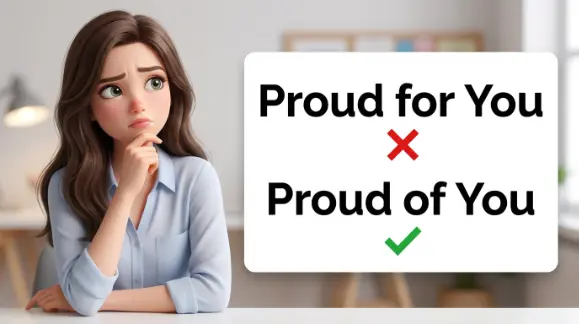
Choosing between “proud for you” and “proud of you” can be confusing, especially when both phrases seem to express happiness about someone’s success.
However, they don’t always communicate the same idea. The phrase “proud of you” is the standard and natural expression when you want to show that you admire someone because of something they have achieved, done, or overcome.
For example, you might tell a friend, “I’m so proud of you” after they graduate, reach an important goal, or accomplish something difficult. “Proud for you” is less common and usually focuses more on sharing someone’s happiness or excitement rather than expressing admiration for their achievement.
Proud of You: Meaning and Correct Usage

“Proud of you” is the most common and grammatically natural expression when you want to express admiration, approval, or satisfaction because of another person’s actions, achievements, or character.
The basic structure is:
Proud + of + person
For example:
- I’m proud of you.
- She is proud of her son.
- We’re proud of our team.
- My parents are proud of me.
- He was proud of his daughter.
When you say “I’m proud of you,” you are usually saying that something the person did makes you feel admiration or satisfaction.
What Does “Proud of You” Mean?

“Proud of you” means that you feel pleased, happy, or impressed because of someone’s actions, achievement, effort, behavior, or personal growth.
For example, imagine your friend studied hard for an important exam and finally passed. You could say:
“I’m really proud of you.”
This means you admire the effort and achievement your friend made.
The phrase can also be used when someone has not achieved something huge. Sometimes the effort itself is enough.
For example:
“You kept going even when things were difficult. I’m proud of you.”
Here, the speaker is expressing admiration for the person’s strength and determination.
When to Use “Proud of You”
You can use “proud of you” in many situations.
After an Achievement
Use it when someone accomplishes something important.
Examples:
- I’m proud of you for graduating.
- We’re so proud of you for winning the competition.
- Your family must be proud of you.
- I’m really proud of you for getting that job.
- You worked hard, and I’m proud of you.
After Someone Makes Progress
You can also use the phrase when someone improves.
For example:
“You used to be afraid of speaking English, but now you speak confidently. I’m proud of you.”
The person does not necessarily need to win something. Their progress can be enough.
When Someone Overcomes a Difficult Situation
“Proud of you” can express emotional support.
For example:
- I know it wasn’t easy, but you did it. I’m proud of you.
- You stayed strong through everything. I’m proud of you.
- You made a difficult decision, and I’m proud of you.
- You didn’t give up when things got hard. I’m proud of you.
When Someone Does the Right Thing
The phrase can also describe approval of someone’s behavior.
For example:
- You admitted your mistake. I’m proud of you.
- You helped someone who needed you. I’m proud of you.
- You stood up for yourself. I’m proud of you.
- You told the truth even though it was difficult. I’m proud of you.
Why Do We Say “Proud of You”?
The adjective proud is normally followed by the preposition of when we identify the person or thing that causes the feeling of pride.
For example:
- proud of my brother
- proud of my daughter
- proud of my work
- proud of my achievements
- proud of you
So, when you’re talking about the person who makes you feel proud, “proud of” is the standard construction.
Think of it this way:
I am proud + of + the person or thing.
Examples:
I am proud of you.
She is proud of her children.
They are proud of their success.
This is why “I’m proud of you” sounds natural to native English speakers.
Proud for You: Meaning and Usage
“Proud for you” is not normally the standard replacement for “proud of you.” However, you may hear or see it in certain conversations.
When people use “proud for you,” they may mean that they feel happy about something good happening to another person.
For example:
“You finally got your dream job. I’m so proud for you!”
Here, the speaker may be emphasizing happiness for the other person.
However, in standard everyday English, many speakers would naturally say:
“I’m so happy for you!”
or:
“I’m so proud of you!”
The best choice depends on what you want to communicate.
Is “Proud for You” Grammatically Correct?
The answer is sometimes, but it is uncommon and context-dependent.
“Proud for you” does not usually replace “proud of you.” If you want to tell someone that you admire their achievement or effort, use “proud of you.”
For example:
Correct and natural:
“I’m proud of you for passing your exam.”
Less natural:
“I’m proud for you for passing your exam.”
If your intended meaning is simply that you are happy about someone’s good news, “happy for you” is often a better choice.
Natural:
“I’m so happy for you!”
This clearly communicates that you share their happiness.
Proud for You vs. Proud of You
The difference becomes easier when you compare their meanings.
| Phrase | Commonness | Main Meaning | Example |
| Proud of you | Very common | Admiration or satisfaction because of someone’s actions or achievements | I’m proud of you for graduating. |
| Proud for you | Uncommon | Feeling pride or happiness on someone’s behalf | I’m proud for you after everything you achieved. |
| Happy for you | Very common | Sharing someone’s happiness about good news | I’m happy for you and your new job. |
In most situations, “proud of you” is the expression you should choose.
If you’re celebrating someone’s good news, but you’re not specifically emphasizing their effort or achievement, “happy for you” may be more natural.
Proud of You vs. Happy for You
These expressions are related, but they aren’t exactly the same.
“I’m Proud of You”
This focuses on admiration, achievement, effort, or personal growth.
Example:
“You studied every night and passed your exam. I’m proud of you.”
The speaker admires what the person did.
“I’m Happy for You”
This focuses more on sharing someone’s happiness or excitement.
Example:
“You got your dream apartment? I’m so happy for you!”
The speaker is celebrating the person’s good fortune.
A Simple Way to Remember the Difference
Think about the focus:
Proud of you = I admire what you did.
Happy for you = I’m happy because something good happened to you.
Sometimes both expressions can be appropriate.
For example:
“You worked so hard for this promotion. I’m proud of you, and I’m really happy for you.”
That sentence sounds completely natural.
Examples of “Proud of You”
Here are some everyday examples to help you understand the phrase.
Example 1: School
“You studied really hard for your final exam. I’m proud of you.”
Example 2: Graduation
“Congratulations on graduating! Your family must be very proud of you.”
Example 3: Career
“You started your own business from nothing. I’m incredibly proud of you.”
Example 4: Personal Growth
“You’ve become much more confident this year. I’m proud of you.”
Example 5: Difficult Times
“I know you’ve been through a lot, but you kept moving forward. I’m proud of you.”
Example 6: Helping Others
“You helped your neighbor when they needed you. I’m proud of you.”
Example 7: Sports
“You gave the game everything you had. I’m proud of you.”
Example 8: Family
“Your daughter has worked so hard. You should be proud of her.”
Example 9: Friendship
“You finally stood up for yourself. I’m proud of you.”
Example 10: Recovery or Improvement
“You’ve made so much progress. I’m really proud of you.”
Examples of “Proud for You”
Because “proud for you” is less common, it requires more attention to context.
You might hear someone say:
“I’m proud for you because you finally achieved your dream.”
The speaker means that they feel a sense of pride or happiness on behalf of another person.
However, many native speakers would probably make the sentence more natural by saying:
“I’m proud of you because you finally achieved your dream.”
Or:
“I’m so happy for you because you finally achieved your dream.”
The second version works especially well when the speaker wants to emphasize shared happiness.
Can You Say “I’m Proud for You”?
Yes, but you should understand that it is not the usual expression.
If someone asks you:
“Which is correct: I’m proud for you or I’m proud of you?”
The safest answer is:
“I’m proud of you” is the standard and more natural phrase.
Use “I’m proud of you” when you admire someone’s achievement, effort, choices, or personal growth.
Use “I’m happy for you” when you want to celebrate their good fortune or happiness.
Use “I’m proud for you” only when the specific context makes that meaning clear.
Common Mistakes With “Proud of You”
English learners sometimes use the wrong preposition after proud.
Mistake 1: Proud for You
Incorrect or unnatural in most contexts:
“I am proud for you because you passed.”
Better:
“I am proud of you because you passed.”
Or:
“I am happy for you because you passed.”
Mistake 2: Proud About You
Another common mistake is using about.
“I’m proud about you.”
This is not the normal construction.
Say:
“I’m proud of you.”
However, proud about can occasionally appear with a different structure, but it is not the standard phrase learners need for this situation.
Mistake 3: Proud With You
Some learners may also say:
“I’m proud with you.”
This is not correct for the intended meaning.
Say:
“I’m proud of you.”
Mistake 4: Proud From You
You should not use from in this expression.
Incorrect:
“I’m proud from you.”
Correct:
“I’m proud of you.”
“Proud of You” Grammar Structure
Understanding the grammar pattern can make the phrase easier to remember.
The basic pattern is:
Subject + be + proud + of + person/thing
Examples:
- I am proud of you.
- She is proud of her son.
- He is proud of his work.
- We are proud of our team.
- They are proud of their children.
You can also add a reason using for.
For example:
“I’m proud of you for working so hard.”
Here, of identifies the person who makes you feel proud, while for introduces the reason.
This distinction is important.
Proud of You for Doing Something
This is one of the most useful patterns to learn.
Examples:
- I’m proud of you for trying.
- I’m proud of you for being honest.
- I’m proud of you for finishing the project.
- I’m proud of you for staying calm.
- I’m proud of you for not giving up.
The structure is:
proud of + person + for + action
For example:
“I’m proud of you for telling the truth.”
This is natural and grammatically correct.
Proud of You in Formal and Informal English
“Proud of you” is common in both casual and supportive communication.
Informal Examples
“I’m so proud of you!”
“Proud of you, bro!”
“Seriously, I’m proud of you.”
“You did great. Proud of you!”
These expressions are common in conversations, text messages, social media posts, and messages between friends.
More Formal Examples
In professional or formal situations, you may want to choose a slightly more polished expression.
For example:
“We are very proud of your achievement.”
“Everyone is proud of the progress you have made.”
“You should be proud of what you accomplished.”
The meaning stays similar, but the wording fits the situation better.
“I’m Proud of You” in Text Messages
In texting, people often shorten the phrase.
For example:
- Proud of you!
- So proud of you!
- Really proud of you.
- I’m honestly proud of you.
- Couldn’t be more proud of you.
- Proud of you always.
- So, so proud of you!
These expressions are natural in casual messages.
If someone has just achieved something important, “So proud of you!” is a warm and simple response.
Is “Proud of You” Romantic?
It can be romantic, but it isn’t automatically romantic.
A romantic partner might say:
“I’m so proud of you for everything you’ve accomplished.”
But parents, teachers, friends, siblings, and coworkers can say the same thing.
The meaning depends on the relationship and context.
For example:
“I’m proud of you, son.”
is clearly parental.
Meanwhile:
“I’m proud of you, babe.”
can sound romantic because of the word babe and the relationship between the speakers.
So, “proud of you” itself does not indicate romance.
Is “Proud of You” Better Than “Proud for You”?
In most situations, yes.
If you’re talking about someone’s achievement, effort, behavior, or growth, “proud of you” is the natural choice.
For example:
“I’m proud of you for getting your degree.”
This sounds natural.
Instead of:
“I’m proud for you for getting your degree.”
A better alternative would be:
“I’m so happy for you!”
The key is to decide whether you want to communicate admiration or shared happiness.
Quick Rule to Remember
Here is an easy memory trick:
Proud of = admiration
Happy for = shared happiness
For example:
“You worked hard and passed the exam. I’m proud of you.”
“You got your dream vacation. I’m happy for you.”
If you remember this simple distinction, you’ll avoid most mistakes.
More Examples in Everyday Conversations
Conversation 1
A: I finally finished my degree!
B: Congratulations! I’m so proud of you.
Conversation 2
A: I got the job I wanted.
B: That’s amazing! I’m really happy for you.
Conversation 3
A: I was scared, but I gave the presentation anyway.
B: You should be proud of yourself.
Conversation 4
A: I finally started exercising regularly.
B: That’s great. I’m proud of you for staying consistent.
Conversation 5
A: I passed my driving test!
B: Congratulations! I’m so proud of you.
Proud of You vs. Proud of Yourself
These two expressions are also worth understanding.
Proud of you means another person feels pride because of you.
“Your parents are proud of you.”
Proud of yourself means you personally feel satisfaction about something you have done.
“You should be proud of yourself.”
Both are correct, but they have different subjects.
Compare:
“I’m proud of you.”
The speaker feels proud.
“You should be proud of yourself.”
The listener should feel proud.
Proud of You vs. Proud About You
“Proud of you” is the standard phrase when you’re expressing pride in a person.
“I’m proud of you.”
“Proud about you” is not the normal expression for this meaning.
So, don’t try to replace of with about.
A simple rule is:
Person or achievement that causes pride → proud of
Examples:
- proud of my daughter
- proud of my work
- proud of my decision
- proud of you
- proud of my achievements
Why Prepositions Matter in English
Small words such as of, for, with, at, on, and about can completely change whether an English expression sounds natural.
This is why prepositions can be difficult for English learners.
You might understand the meaning of proud, but choosing the correct preposition still matters.
Instead of translating directly from your first language, learn common phrases as complete patterns.
For example:
proud of someone
is a useful phrase pattern to memorize.
Then you can easily create sentences:
proud of me
proud of you
proud of him
proud of her
proud of them
proud of our team
This approach makes English grammar much easier.
How to Avoid the “Proud for You” Mistake
If you’re unsure, ask yourself one question:
Am I admiring what this person did, or am I simply sharing their happiness?
If you’re admiring their achievement:
I’m proud of you.
If you’re celebrating their good news:
I’m happy for you.
For example:
“You worked for years to become a doctor. I’m proud of you.”
But:
“You’re getting married next month? I’m so happy for you!”
Of course, both expressions can sometimes fit the same situation.
Common Questions About “Proud for You” vs. “Proud of You”
Is “proud of you” grammatically correct?
Yes. “Proud of you” is grammatically correct and very common in English. It expresses admiration or satisfaction because of someone’s actions, achievements, effort, or personal growth.
Is “proud for you” correct English?
“Proud for you” can occur in English, but it is uncommon and usually carries a different meaning. It should not normally replace “proud of you.” In most everyday situations, use “proud of you” or “happy for you.”
Should I say “I’m proud of you” or “I’m proud for you”?
Usually, say “I’m proud of you.” Use it when you admire someone’s achievement, effort, behavior, or progress.
Is “I’m happy for you” the same as “I’m proud of you”?
Not exactly. “I’m happy for you” means you share someone’s happiness or are pleased about their good fortune. “I’m proud of you” focuses more on admiration for what they did.
Can I say “I’m proud of you for trying”?
Yes. This is completely natural.
“I’m proud of you for trying.”
Here, of you identifies the person, while for trying explains the reason for the pride.
Can parents say “I’m proud of you”?
Absolutely. Parents commonly use this phrase when their children achieve something, make progress, show courage, or behave responsibly.
Can friends say “I’m proud of you”?
Yes. Friends often say “I’m proud of you” to support each other after achievements, difficult experiences, or personal growth.
Does “proud of you” mean love?
Not necessarily. It can express affection and support, but it does not automatically mean romantic or familial love. Friends, teachers, coworkers, parents, and partners can all use the phrase.
Is “proud for you” more emotional?
Not necessarily. Although someone may use “proud for you” to express strong happiness on another person’s behalf, it is less common. “Proud of you” is still the clearer and more natural choice for expressing admiration.
Which is more common: “proud of you” or “proud for you”?
“Proud of you” is much more common and natural in standard everyday English.
Can I say “so proud of you”?
Yes. “So proud of you!” is a very common informal expression, especially in texts, social media comments, and conversations.
Final Verdict:
In conclusion, “proud of you” is the correct and natural expression when you want to praise someone for their achievements, efforts, or progress. For example, you can say, “I’m proud of you for passing your exam.” The phrase “proud for you” is not normally used in standard English to express personal pride in someone’s accomplishment.
Instead, you may use “happy for you” when you want to show that you are pleased about someone’s success or good news. Understanding this small difference can help you sound more natural and confident in everyday conversations, messages, and writing. When praising someone directly, remember: “proud of you” is the right choice.

Michael Collins is a skilled writer who creates clear, practical, and reader-friendly content. He focuses on language, grammar, word meanings, and everyday expressions, making complex topics simple to understand.