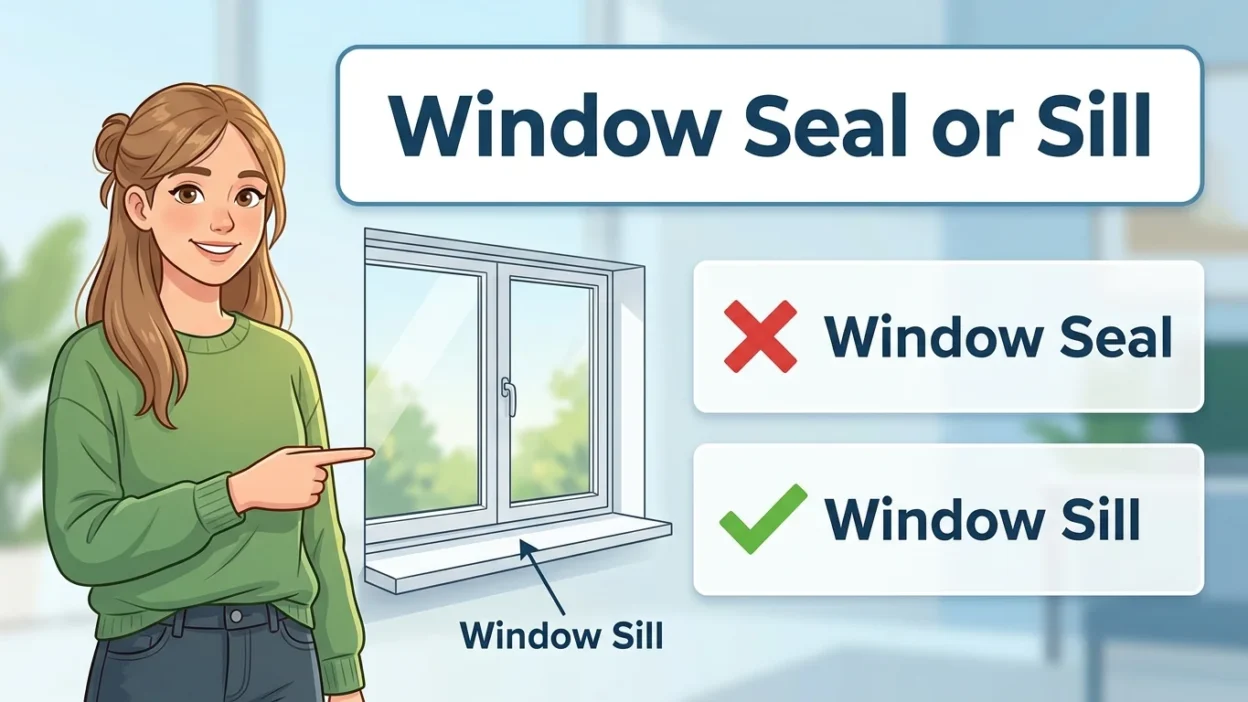
Choosing between Window Seal or Sill can be confusing because both terms relate to parts of a window, but they refer to completely different things.
If you have ever wondered whether you should say “window seal” or “window sill,” understanding the difference can help you use the correct word in writing and everyday conversation.
A window sill is the horizontal ledge at the bottom of a window, often used to support the window or hold small objects.
What Does “Window Seal” Mean? 🪟
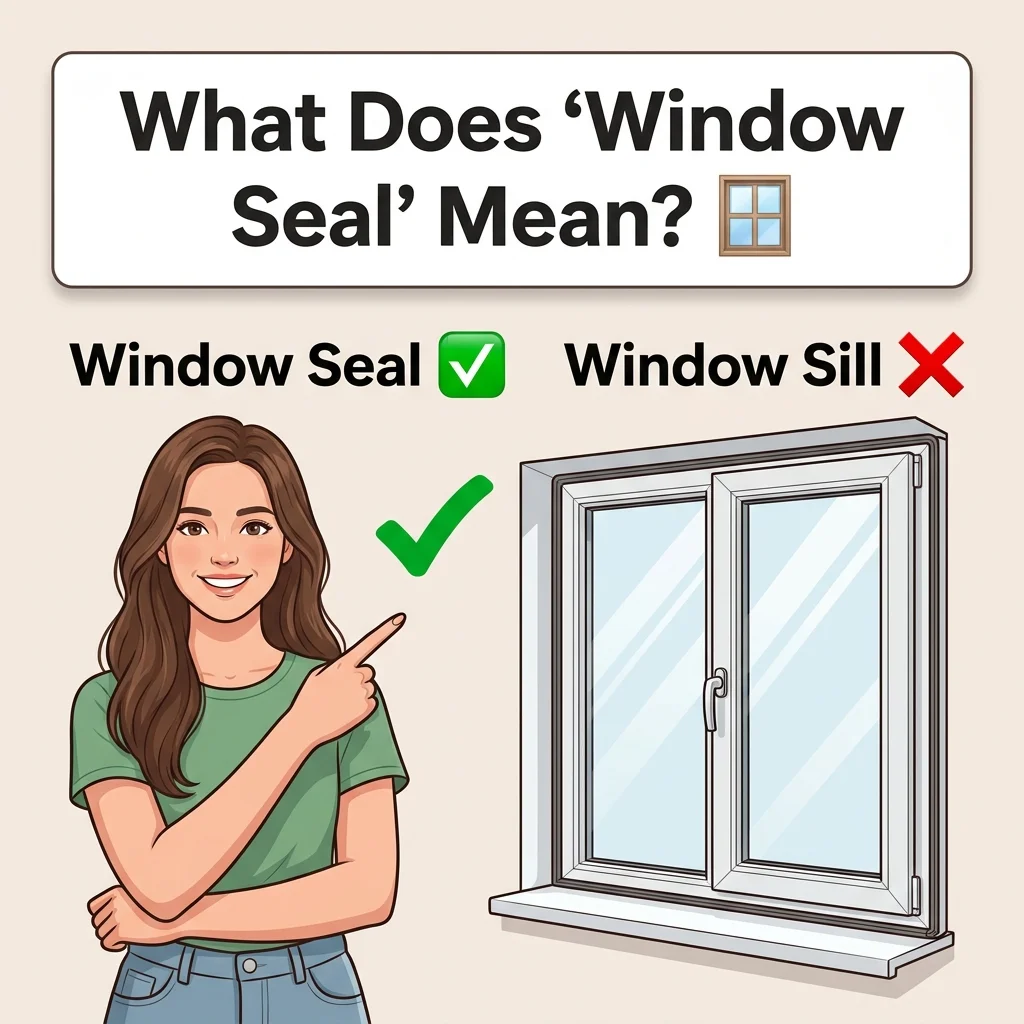
A window seal is a material or component that helps close gaps around a window and prevents unwanted air, water, dust, or noise from entering or escaping.
Depending on the type of window, a seal can be made from materials such as rubber, silicone, foam, felt, vinyl, or other weather-resistant materials.
For example:
The window seal is damaged, so cold air is coming into the room.
Here, window seal refers to the material that keeps the window tightly closed and protected from outside conditions.
Window seals are especially important for energy efficiency. A damaged seal can allow drafts to enter, which may make a room harder to heat or cool.
What Is a Window Seal Used For?
A window seal can serve several purposes:
- Blocking drafts
- Preventing water leaks
- Reducing dust
- Limiting outside noise
- Improving insulation
- Helping maintain indoor temperatures
- Preventing gaps around the window
- Protecting the window frame from moisture
The exact function depends on the type and location of the seal.
What Does “Window Sill” Mean? 🏠
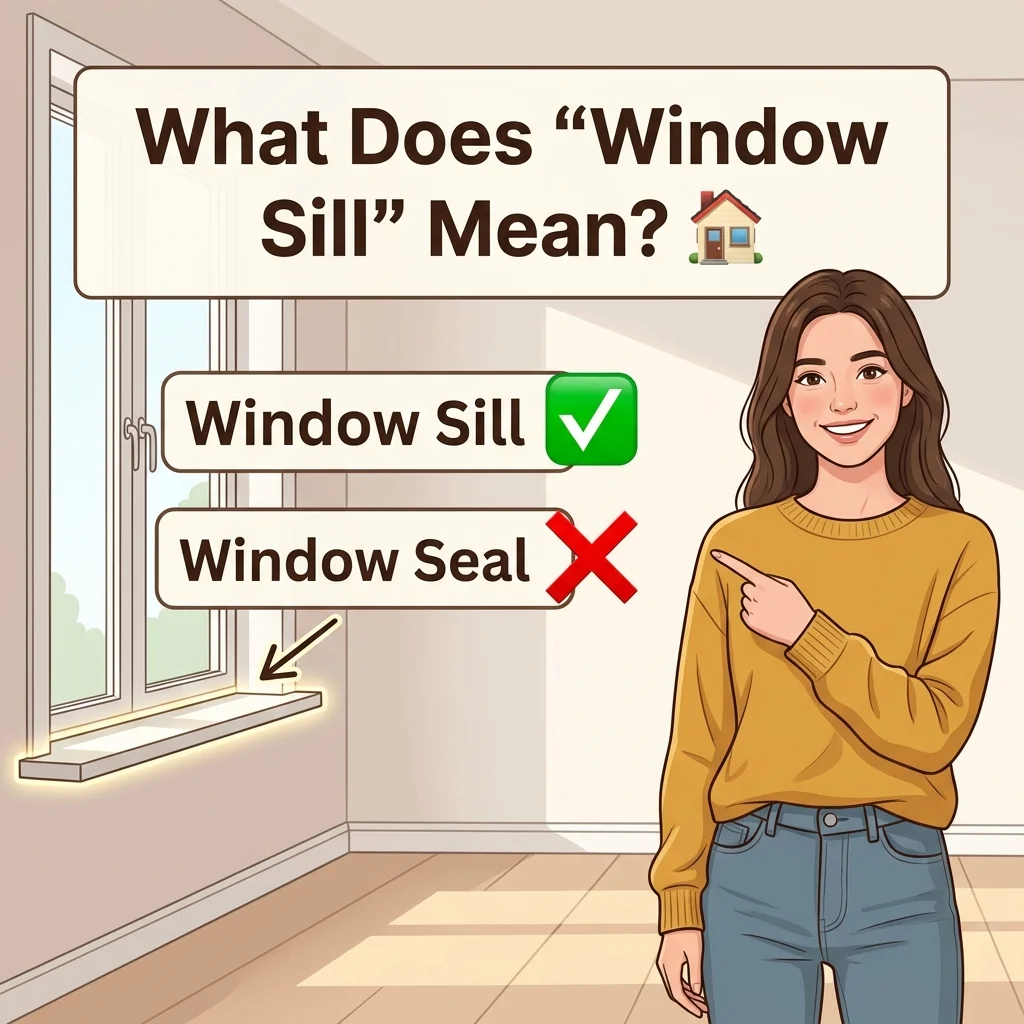
A window sill is the horizontal surface or ledge located at the bottom of a window.
It is usually positioned where the window meets the wall. A sill can be made from wood, stone, concrete, metal, vinyl, or another material.
For example:
She placed a small plant on the window sill.
In this sentence, the window sill is the flat surface underneath the window where the plant can sit.
A window sill can also have an important practical function. Exterior sills are often designed with a slight slope so rainwater can run away from the building instead of collecting around the window.
Window Seal vs. Window Sill: What Is the Difference?
The simplest way to remember the difference is this:
A window seal closes gaps. A window sill is the bottom ledge of a window.
Although both are associated with windows, they have different purposes.
| Feature | Window Seal | Window Sill |
| Meaning | Material or component that seals gaps | Horizontal bottom part of a window |
| Main purpose | Blocks air, water, dust, and drafts | Supports, finishes, or protects the window area |
| Typical materials | Rubber, silicone, foam, vinyl | Wood, stone, concrete, metal, vinyl |
| Location | Around or within window joints | At the bottom of the window |
| Can prevent drafts? | Yes | Not usually its primary purpose |
| Can hold objects? | No | Often, especially interior sills |
| Can direct rainwater? | Sometimes indirectly | Yes, especially exterior sills |
| Structural/finished element | Usually a sealing component | Often a structural or finishing component |
So, if you are talking about a rubber strip around a window, you probably mean a window seal.
If you are talking about the flat ledge underneath the window, you mean the window sill.
Window Seal Meaning in Simple English
In simple English, a window seal means something that closes or protects the gaps around a window.
Think of it like a protective barrier.
If there is a tiny space between the window and its frame, a seal helps close that space. This can keep outside air and moisture from getting inside.
Examples of “Window Seal”
Here are some natural examples:
- The window seal needs to be replaced.
- I noticed a crack in the window seal.
- A damaged window seal can cause drafts.
- The technician checked the window seal for leaks.
- The new window seal improved the insulation.
- Water is entering because the window seal is worn out.
- We need a replacement seal for this window.
In all these examples, seal refers to the material or mechanism that closes a gap.
Window Sill Meaning in Simple English
In simple English, a window sill means the ledge at the bottom of a window.
It may be inside the room, outside the building, or part of the window’s overall construction.
Examples of “Window Sill”
- The cat is sitting on the window sill.
- There is dust on the window sill.
- She placed flowers on the window sill.
- The wooden window sill needs painting.
- Rainwater collected on the exterior window sill.
- The window sill is made of marble.
- We cleaned the window and the window sill.
Here, sill refers to the physical ledge or bottom section of the window.
Is a Window Sill the Same as a Window Seal?
No. A window sill is not the same as a window seal.
A sill is a physical part of the window area, while a seal is designed to close gaps and prevent unwanted air or water movement.
For example, imagine looking at a window from inside a bedroom.
The flat surface at the bottom where you might place a small plant is the window sill.
The flexible strip that helps prevent air from passing through gaps around the window is the window seal.
They can work together, but they are not interchangeable terms.
Window Seal or Sill: Which Word Should You Use?
Choosing between window seal and window sill depends on what you are describing.
Use window seal when you are talking about:
- Weatherproofing
- Drafts
- Air leaks
- Water leaks
- Rubber strips
- Foam strips
- Silicone sealing
- Gaps around a window
- Insulation
Use window sill when you are talking about:
- The bottom ledge
- A surface under the window
- A place for plants
- Wood or stone beneath a window
- Exterior water drainage
- The finished bottom part of a window
A quick test can help:
Can you place something on it?
If yes, you may be talking about a window sill.
Does it close a gap or stop air and water from passing through?
If yes, you are probably talking about a window seal.
Interior Window Sill vs. Exterior Window Sill
The word sill can describe different parts depending on the window design.
Interior Window Sill
An interior window sill is the ledge you see inside a room.
It can be decorative or functional. People often place small plants, decorations, books, or other lightweight objects on it.
For example:
The sunlight reaches the flowers on the interior window sill.
Interior sills can be made from:
- Wood
- MDF
- PVC
- Marble
- Granite
- Stone
- Composite materials
Exterior Window Sill
An exterior window sill is located on the outside of the building.
It can play an important role in water management. Many exterior sills are angled so rainwater moves away from the wall.
For example:
The exterior window sill directs rainwater away from the house.
A properly designed exterior sill can help reduce water accumulation around the window.
What Is a Window Seal Made Of?
Window seals can be made from different materials depending on the type of window and the job they need to perform.
Rubber
Rubber seals are common because they are flexible and can create a tight barrier.
They are often used in modern windows and doors.
Silicone
Silicone is frequently used around window joints because it can create a flexible, water-resistant seal.
For example:
The contractor applied silicone around the window frame.
Foam
Foam weatherstripping can be used to reduce drafts around movable or fixed parts of a window.
Vinyl
Vinyl seals are also used in many modern window systems because they can provide flexibility and weather resistance.
What Is a Window Sill Made Of?
Window sills come in many materials.
Wood
Wooden window sills are common in traditional homes. They can look warm and attractive, but they need protection from moisture.
Stone
Stone and marble sills can provide a durable and decorative finish.
Concrete
Concrete window sills are common in some exterior building designs.
Metal
Metal may be used for exterior window components because of its durability and resistance to certain environmental conditions.
Vinyl
Vinyl window sills are lightweight and relatively easy to maintain.
Window Seal vs. Window Sill Examples
Understanding the words becomes easier when you see them in real sentences.
Example 1
The window seal is cracked.
This means the sealing material has been damaged.
Example 2
The window sill is cracked.
This means the physical ledge or bottom section has been damaged.
These sentences describe two different problems.
Example 3
Cold air is coming through the window because the seal is damaged.
Here, seal is correct because the issue involves air passing through a gap.
Example 4
I put a small plant on the window sill.
Here, sill is correct because the sentence refers to a surface.
Example 5
Water is leaking around the window seal.
The focus is on the barrier that prevents water from entering.
Example 6
The wooden window sill needs to be replaced.
The sentence refers to the physical bottom ledge.
Common Mistakes With “Window Seal” and “Window Sill”
Because the two words sound related, people sometimes use them incorrectly.
Mistake 1: Calling the Ledge a Seal
Incorrect:
I put my flowers on the window seal.
Correct:
I put my flowers on the window sill.
A flower sits on a sill, not a seal.
Mistake 2: Calling the Rubber Strip a Sill
Incorrect:
The rubber sill around my window is damaged.
Correct:
The rubber window seal around my window is damaged.
The flexible rubber component is a seal.
Mistake 3: Using “Seal” for the Bottom Surface
Incorrect:
Clean the window seal because there is dust on the ledge.
If you mean the flat ledge, sill is the better word.
Correct:
Clean the window sill because there is dust on the ledge.
Mistake 4: Assuming Every Leak Means the Seal Is the Problem
A window leak does not automatically mean the seal is damaged. Water can enter because of problems involving flashing, drainage, installation, the frame, the sill, or other components.
So, avoid saying:
The seal is definitely the problem.
unless you have identified the actual cause.
Window Seal Spelling: “Seal” or “Seel”?
The correct spelling is seal.
Correct:
window seal
Incorrect:
window seel
The word seal has several meanings. As a verb, it means to close something securely. As a noun, it can mean a material that closes a gap.
For example:
Please seal the package.
And:
The window seal is damaged.
The pronunciation can make spelling confusing, especially for beginners.
Window Sill Spelling: “Sill” or “Sil”?
The correct spelling is sill.
Correct:
window sill
Incorrect:
window sil
The word sill contains two l’s.
A useful spelling trick is to remember:
Sill = two Ls
You can connect the two Ls with the two sides of a window ledge in your mind.
Why Is a Window Seal Important?
A good window seal can contribute to comfort and protection inside a building.
When seals become damaged, gaps can allow air to move through the window area. Depending on the situation, moisture may also enter.
Possible signs of a damaged seal include:
- Noticeable drafts
- Moisture around the window
- Water entering during rain
- Cracked or hardened sealing material
- Gaps around the frame
- Increased outside noise
- Condensation in some window systems
However, these signs can have multiple causes. If you notice serious water intrusion or damage, professional inspection may be appropriate.
Why Is a Window Sill Important?
A window sill can serve both practical and decorative purposes.
An interior sill can provide a finished transition between the window and wall. It can also create a useful ledge.
An exterior sill can help move water away from the wall and window opening.
For example:
The exterior sill is angled so rainwater flows away from the building.
Therefore, the sill is more than just a decorative ledge in many window designs.
Can a Window Have Both a Seal and a Sill?
Yes. A window can have both a window seal and a window sill.
In fact, many window systems contain multiple components that work together.
The sill may form the bottom part of the window assembly, while seals help close gaps between different components.
Think of a car door. The door itself and the rubber weatherstripping around it are different parts, even though they work together.
Similarly, a window sill and window seal can have separate jobs within the same window system.
Window Seal or Sill for Water Leaks?
This question depends on what you are describing.
If you are talking about the material that prevents water from passing through a gap, the term seal may be appropriate.
If you are talking about the bottom ledge that helps move water away from the window, the term sill is appropriate.
However, water leaks can involve several window components. A visible leak does not always tell you which component has failed.
For that reason, it is better to identify the exact location and cause before replacing anything.
Window Seal or Sill for Drafts?
For drafts, window seal is normally the more relevant term.
A damaged or worn seal can allow outside air to pass through gaps around a window.
For example:
The room feels cold because the window seal is worn.
You would not normally call the sealing material a window sill.
Window Seal or Sill for a Plant?
For a plant, use window sill.
Example:
I placed my small plant on the window sill.
The sill provides the surface.
You would not say:
I placed my small plant on the window seal.
That sentence would suggest you placed the plant on a sealing component, which is not the normal meaning.
Window Sill vs. Window Ledge
The words window sill and window ledge can sometimes refer to a similar surface, especially in everyday conversation.
A window sill is the more specific architectural term for the bottom part of a window opening.
A ledge is a broader word for a narrow horizontal surface.
For example:
The cat is sitting on the window sill.
is a natural and specific sentence.
You might also hear:
The cat is sitting on the window ledge.
Both can work in everyday English, depending on the design and context.
Window Seal vs. Weatherstripping
Another term you may encounter is weatherstripping.
Weatherstripping refers to material used around doors and windows to reduce air and moisture movement.
A window seal can be part of a window’s weather-sealing system.
For example:
The old weatherstripping around the window needs replacement.
This sentence focuses on the material used to reduce drafts.
The terms can overlap in practical conversations, but they are not always exact synonyms. The specific product or component may have a more precise technical name.
Window Seal vs. Caulk
A window seal and caulk are also not always the same thing.
Caulk is a flexible material used to fill and seal joints or gaps. It can be applied around window frames.
A window may have factory-installed seals plus caulk around certain exterior or interior joints.
For example:
The contractor replaced the old caulk around the window frame.
That does not necessarily mean the window’s internal seal was replaced.
How to Remember the Difference
Here is an easy memory trick:
Seal = Stop
A seal helps stop air, water, dust, or other unwanted movement.
Sill = Surface
A sill is a surface or ledge at the bottom of a window.
So remember:
Seal stops. Sill supports.
This simple trick can help you choose the correct word quickly.
Quick Comparison: Seal vs. Sill
| Word | Easy Meaning | Example |
| Seal | Material that closes a gap | The window seal is damaged. |
| Sill | Bottom ledge of a window | The plant is on the window sill. |
| Weatherstripping | Material that reduces drafts | Replace the window weatherstripping. |
| Caulk | Material used to seal joints and gaps | The caulk around the frame is cracked. |
| Frame | Structure holding the window | The window frame is made of vinyl. |
More Sentence Examples With “Window Seal”
Here are additional examples to make the usage clear:
- The window seal has become brittle.
- We need to inspect the window seal.
- A damaged seal can allow drafts.
- The technician replaced the old window seal.
- Check the window seal before winter.
- The seal around the window looks worn.
- Moisture may enter through a damaged seal.
- The new seal fits tightly around the window.
- The window seal helps reduce air leakage.
- I noticed a gap near the window seal.
More Sentence Examples With “Window Sill”
Here are some examples using window sill:
- The cat jumped onto the window sill.
- She cleaned the dusty window sill.
- The window sill is made of white marble.
- I placed a vase on the window sill.
- The wooden window sill needs painting.
- Rainwater is running off the exterior window sill.
- The old window sill is cracked.
- He measured the window sill before buying the replacement.
- The sunlight falls across the window sill.
- The children decorated the window sill with small plants.
How to Use “Seal” as a Verb
The word seal can also be a verb.
When used as a verb, seal means to close something securely so that air, water, or another substance cannot pass through.
For example:
We need to seal the gap around the window.
Here, seal describes the action.
Other examples include:
- Seal the crack around the frame.
- The contractor sealed the opening.
- Make sure the window is properly sealed.
- The material seals the gap between the two surfaces.
This is different from sill, which is a noun describing the physical window ledge.
Is “Window Seal” Singular or Plural?
Use window seal when talking about one seal.
The window seal is damaged.
Use window seals when talking about more than one.
The window seals need to be replaced.
You can also use possessive forms:
The window’s seal is damaged.
However, window seal is often more natural when referring to the component itself.
Is “Window Sill” Singular or Plural?
Use window sill for one sill.
The window sill is dirty.
Use window sills for multiple sills.
The window sills need cleaning.
You can also say:
The bedroom has three wide window sills.
The plural form simply adds s to sill.
Common Questions About Window Seal or Sill
Is it called a window sill or seal?
Both terms are correct, but they describe different things. A window sill is the bottom ledge of a window, while a window seal helps close gaps and prevent air or water from passing through.
What is the seal at the bottom of a window called?
The exact name depends on the window design. It may be called a window seal, weather seal, weatherstripping, or another specific component. The bottom structural ledge itself is generally called the window sill.
What is the difference between a window sill and a window frame?
The window frame surrounds and supports the window, while the window sill is the bottom horizontal part of the window opening or frame area.
Can you replace a window seal?
Many types of window seals can be replaced, but the process depends on the window design and seal type. Some seals are simple weatherstripping, while others are integrated into the window assembly.
Does a window sill stop water?
An exterior window sill can help direct water away from the window and wall. However, proper water management also depends on other components, installation, drainage, and flashing.
Why is my window sill wet?
A wet window sill can have several possible causes, including condensation, rainwater intrusion, drainage problems, or a damaged seal. Finding the source is important before deciding which part needs repair.
Should I say “window sill” or “window ledge”?
Both can be used in everyday English when referring to the horizontal surface at the bottom of a window. Window sill is the more specific term.
Is “window seal” the same as caulk?
Not necessarily. A window seal is a sealing component, while caulk is a material commonly used to fill and seal joints or gaps. A window can use both.
What do you call the bottom of a window?
The bottom horizontal part is commonly called the window sill. Depending on the specific design, other components may also be located in this area.
Which is correct: “window seal” or “window sill”?
Both are correct English terms. The correct choice depends on what you mean. Use seal for a sealing component and sill for the bottom ledge or horizontal surface.
Final Thought
The difference between window seal and window sill is simple once you understand what each word describes. A window seal is designed to close or protect gaps around a window. It helps reduce drafts, moisture entry, dust, and other unwanted movement.
A window sill is the horizontal bottom part or ledge of a window. It can provide a finished surface inside the room and can help direct rainwater away from the building outside.

Emily Parker is a dedicated writer who enjoys creating clear, useful, and easy-to-understand content. She focuses on language, grammar, word meanings, and everyday expressions to help readers find simple and reliable answers.